Réf : 2023/25-05-23/01 The women’s ceremonial costume in the Eastern region of Algeria: knowledge and skills associated with the making and adornment of the ‘Gandoura’ and the ‘Melehfa’
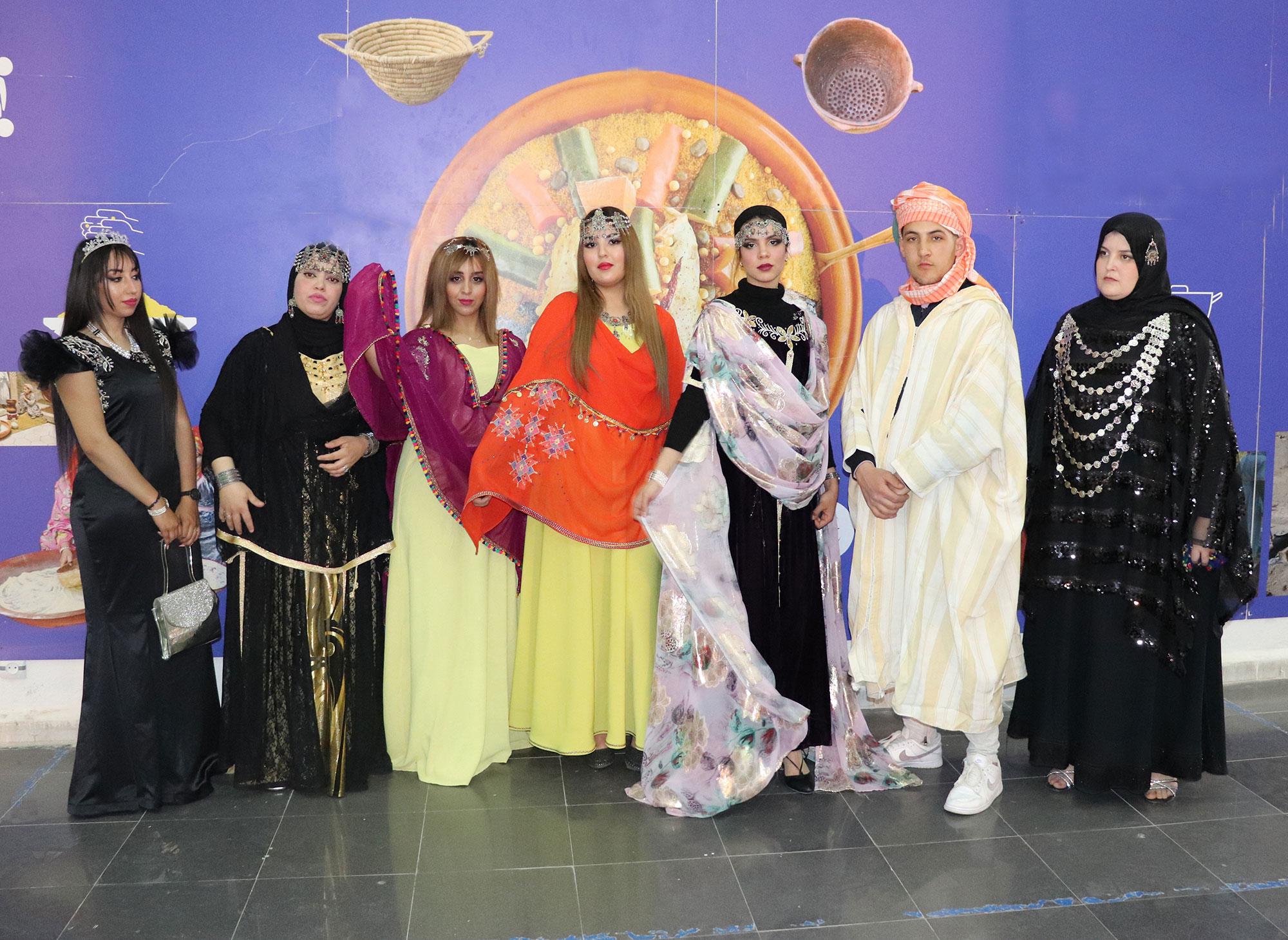
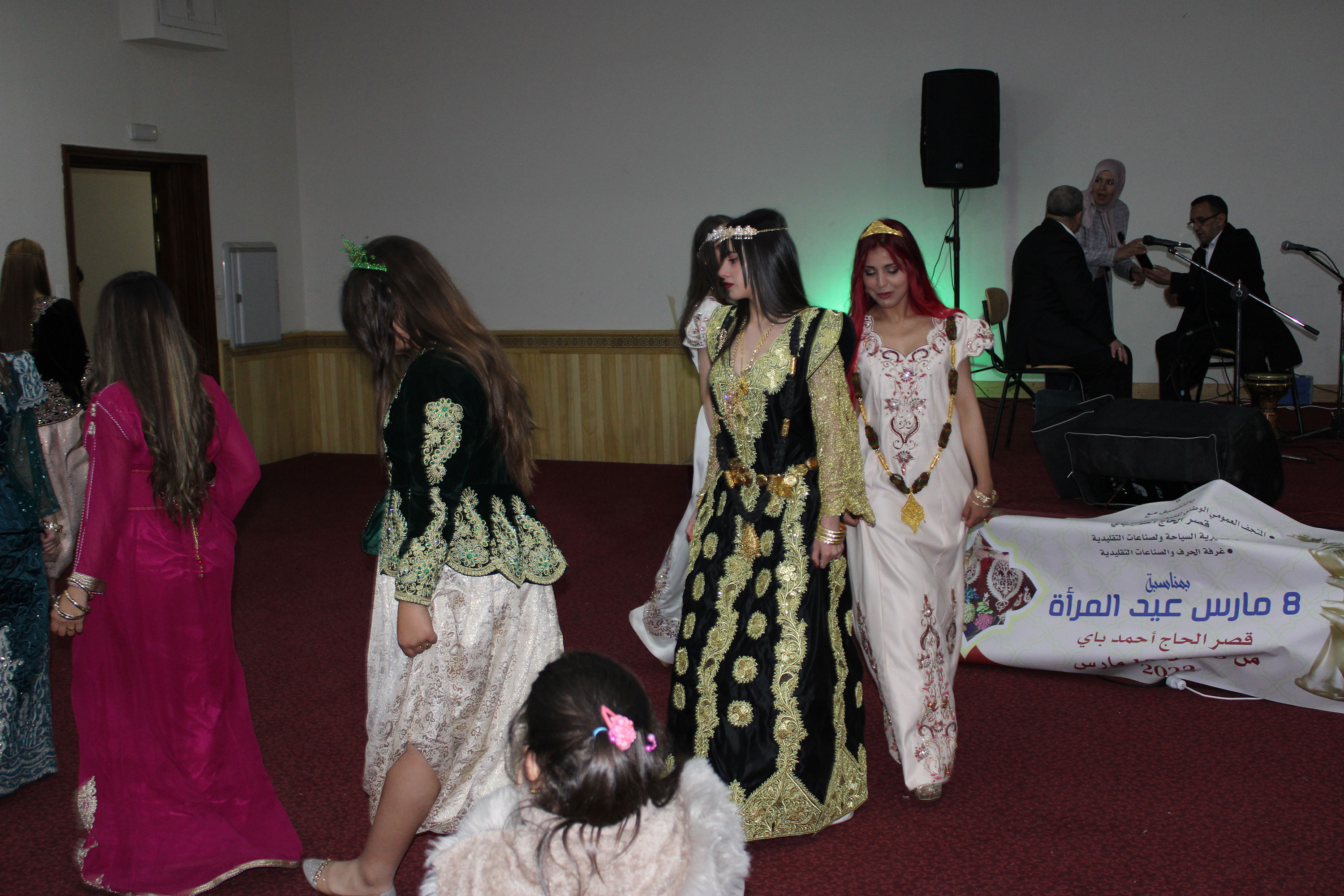
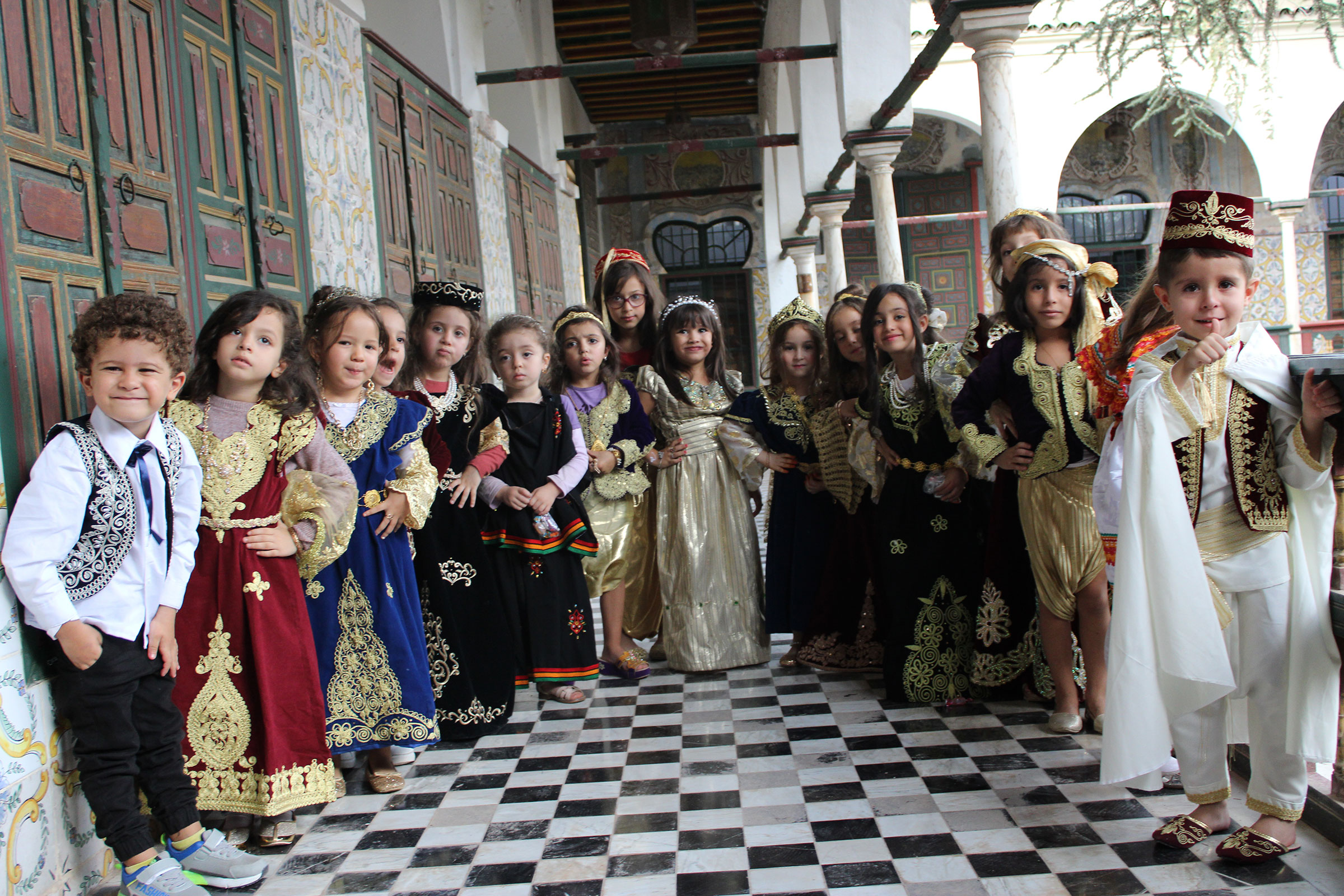
On various occasions such as celebrations, festive ceremonies, and rites of passage, urban and rural women of eastern Algeria display embroidered Gandoura and Melehfa, along with styled hair and jewelry crafted by artisans according to aesthetic norms and knowledge passed down from generation to generation.
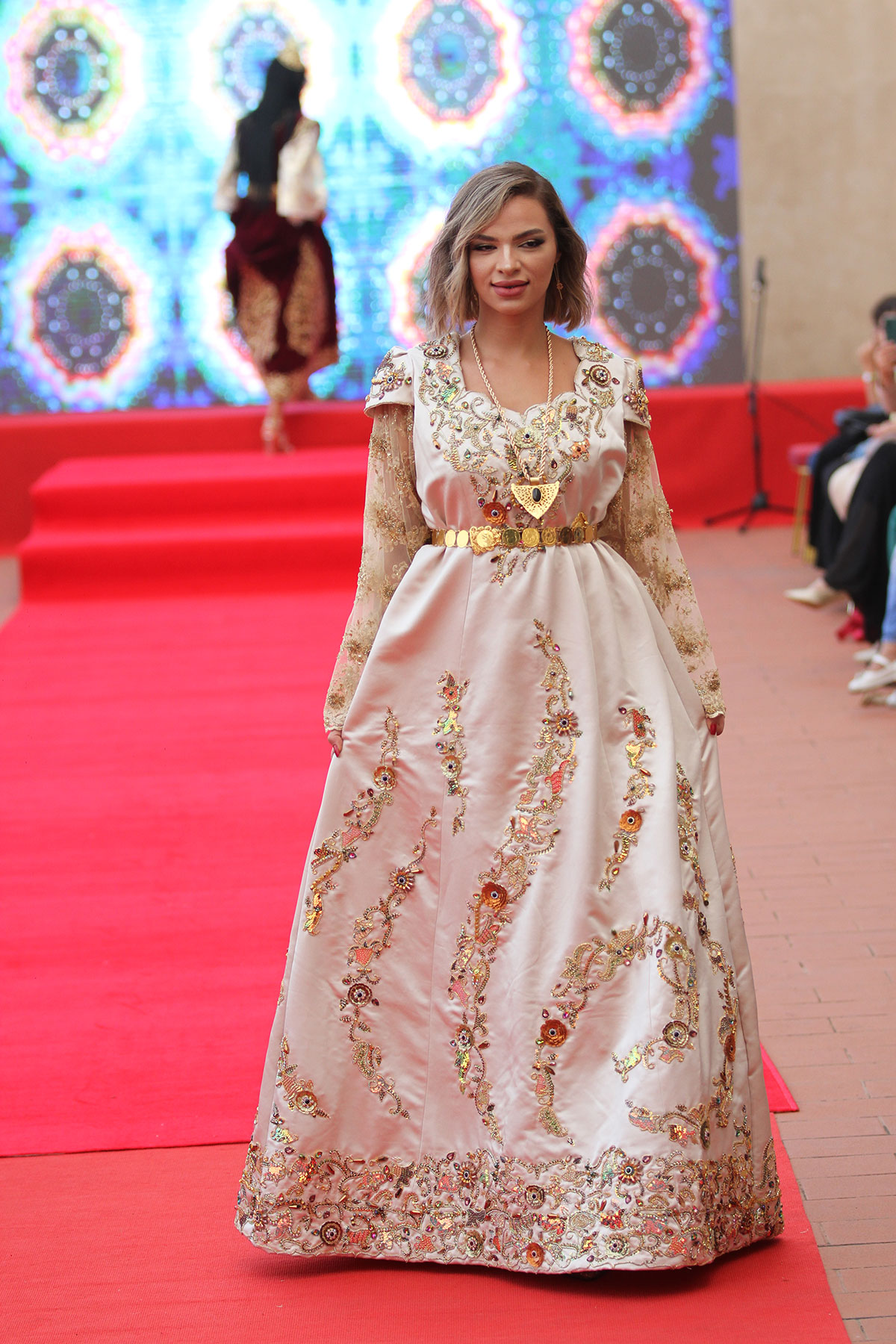
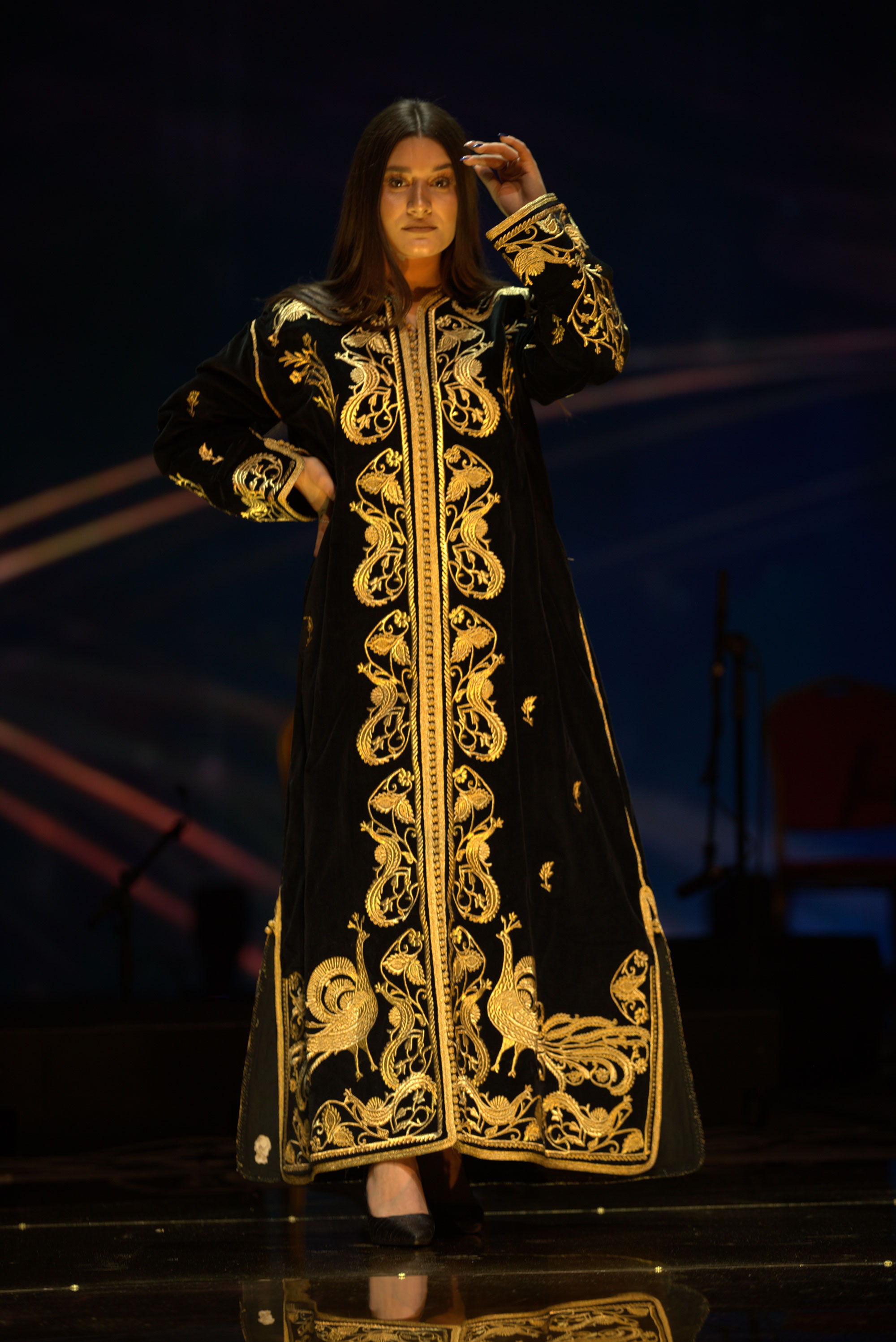
The Gandoura, a long flared dress made of satin or velvet, is embroidered with floral and animal motifs using gold-thread techniques such as elmejboud, elfetla, tell, or beadwork. The conical headdress is embroidered with gold thread or adorned with metal pieces, a diadem (eljbine), or a medallion chain known as khit-errouh. The adornments include earrings, pearl or amber bead necklaces (skhab), and various collars. A chain is worn around the waist, bracelets (msayess) on the arms, and khelkhal anklets on the feet. Over these garments, women may wear quat and quwiyet jackets, caftans embroidered using the same techniques, or a draped covering called elhaf.
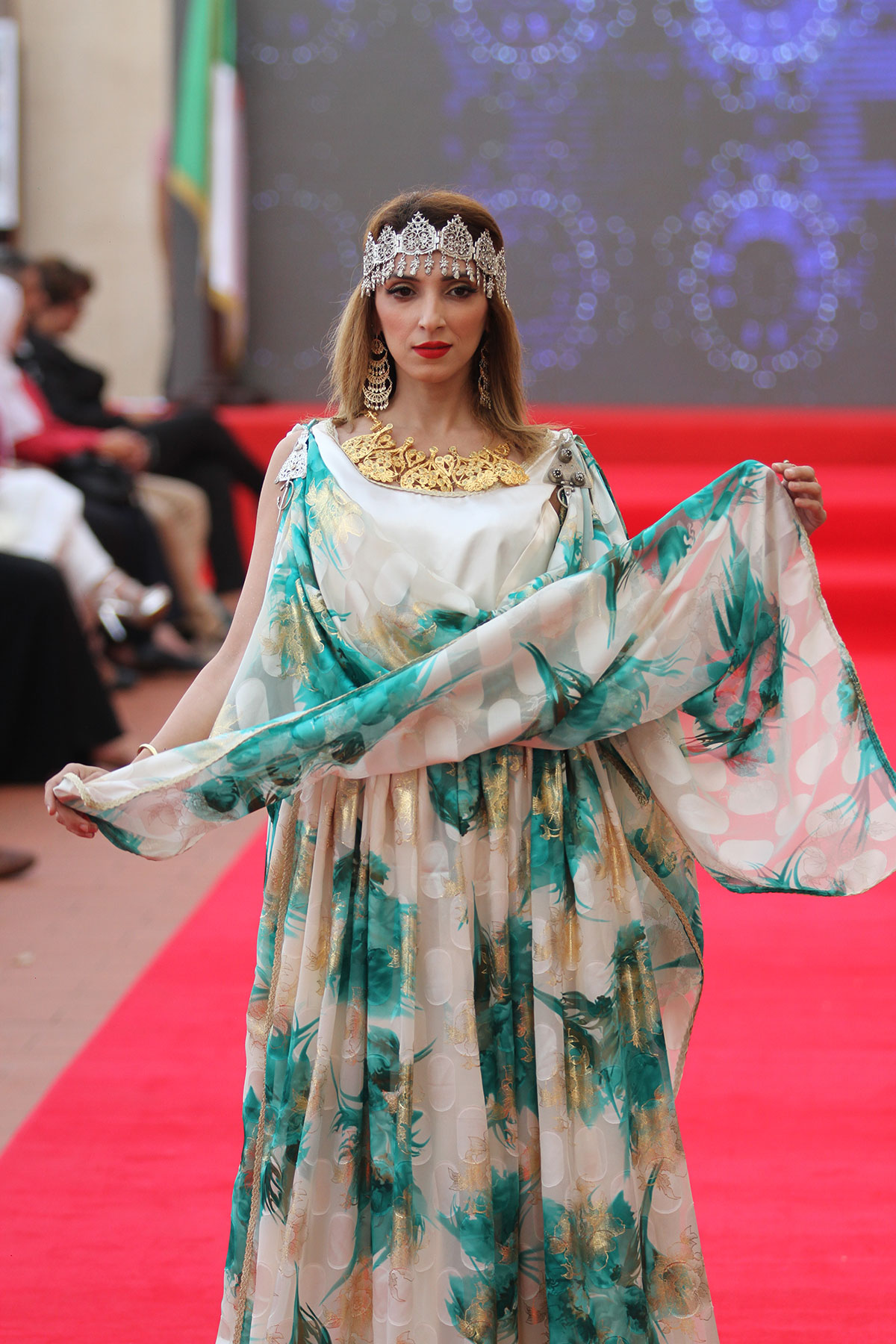
The Melehfa, a large enveloping draped garment originally without seams, is secured at the shoulders with two silver brooches (abzim) and at the waist with a long belt made of colored wool cord. The excess fabric in the upper part is folded over the chest and back. The headdress consists of a turban (guenour) or a scarf adorned with pendants or a diadem (eljbine). The ears are decorated with mcheref earrings, the arms with bracelets, and the ankles with khelkhal rings.
These decorated and adorned garments—attested since at least the 16th century—along with the associated craftsmanship and the collective ceremonial ways of wearing them, form an essential component of the cultural identity of eastern Algeria.