Num d'inventaire : 2023/16/15/DZ
Communities across the country use the word “henna” in various dialect forms, such as al-hanna, al-hanni, or anella.
Type of element according to UNESCO’s classification
This element falls under Article 2/2/c, within the domain of social practices, rituals, and festive events, and secondarily under 2/2/e, within the domain of traditional craftsmanship, in accordance with UNESCO’s classification.
Community(ies) or group(s) associated with the element
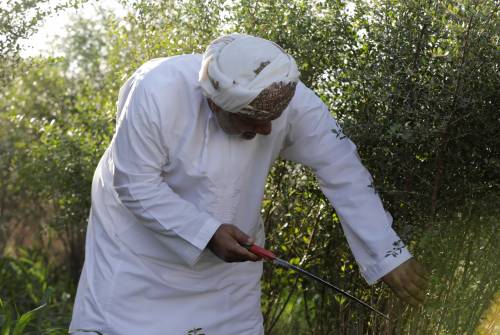
At the agricultural level, henna involves farmers—mainly men, since it is a plant cultivated in fields.
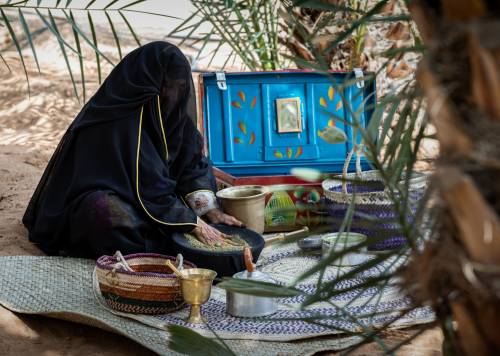
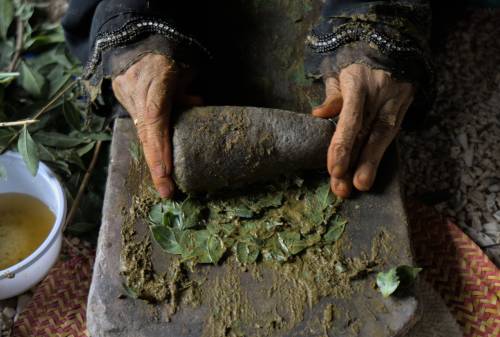
Produced on a large scale due to its frequent and widespread use, henna is ground semi-industrially with millstones operated by men. Very few women still prepare it at home using a mortar and pestle.
Commercially, shops selling artisanal products are mostly held by men, though some women also work in sales.
However, these two aspects remain minor compared to the social and cultural dimension of henna, which is almost exclusively carried out by women.
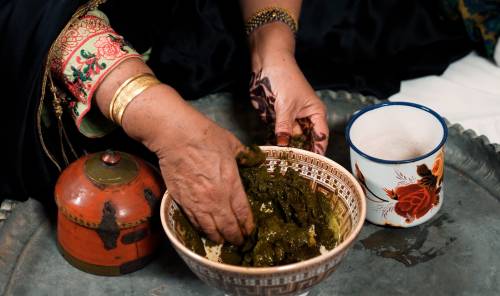
Although the groom’s henna is applied by men, it is women who purchase and prepare the mixture that will be applied.
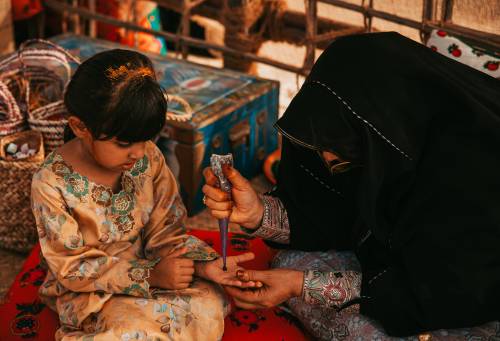
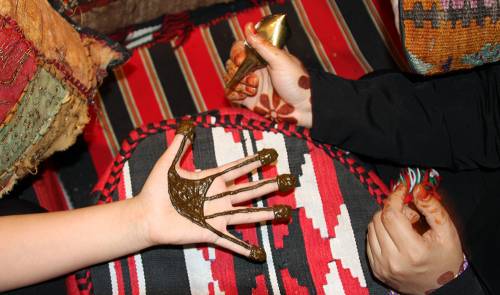
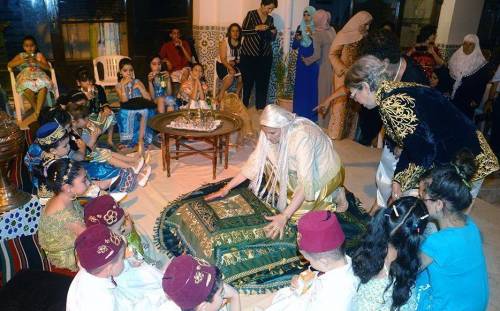
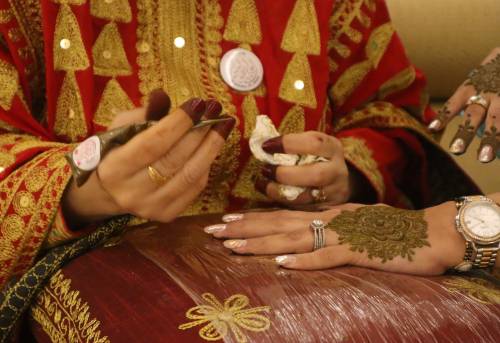
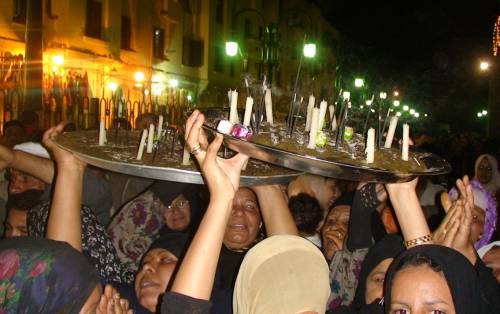
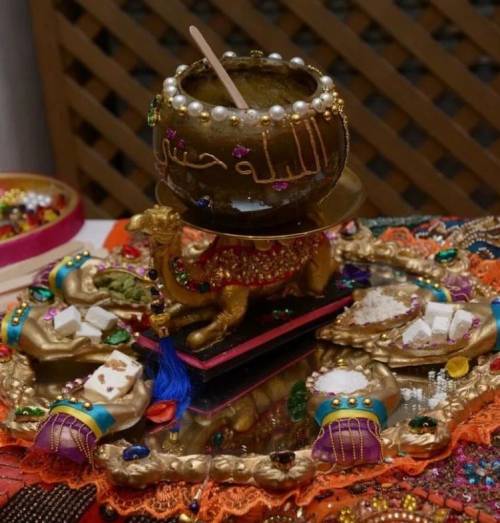
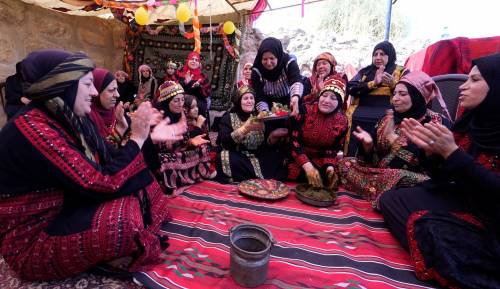
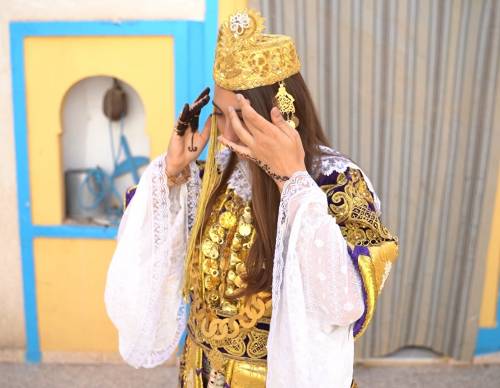
Besides this exception, women perform all tasks related to henna. They prepare and apply henna for the bride, for circumcised children, and for offerings made to zaouias. To mark religious rituals (the two Eids, the Mawlid, Ashura, etc.), it is usually the mistress of the house who prepares the mixture, which will then be used by the whole family.
Women also prepare henna outside ceremonial contexts, for medicinal purposes, such as treating white hair or applying it to the lower limbs.
Physical location of the element
The practice and ritual of henna are present within communities throughout Algeria. However, its agricultural cultivation is mainly found in areas rich in water: in the High Plateaus such as Sétif and M’Sila, in the Ghoufi gorges, or near the desert, for example in Zribet El Oued (Biskra).
Henna is a plant that requires abundant water and grows in temperate climates. It can reach up to 2 meters in height once a certain temperature is reached.
The plant dies below 5°C.