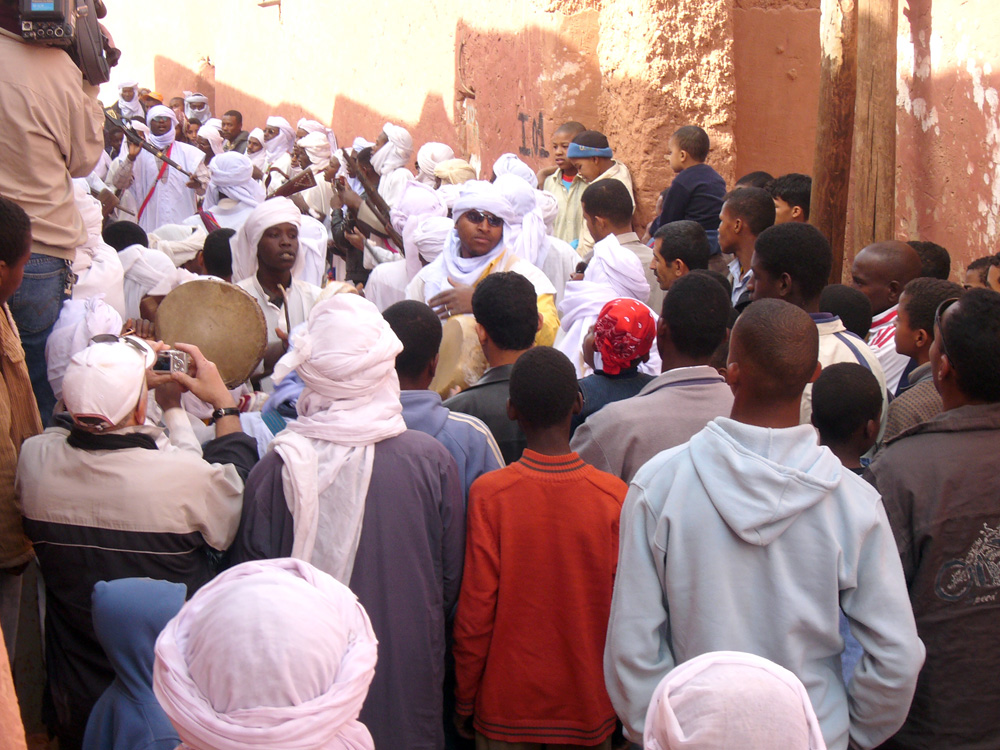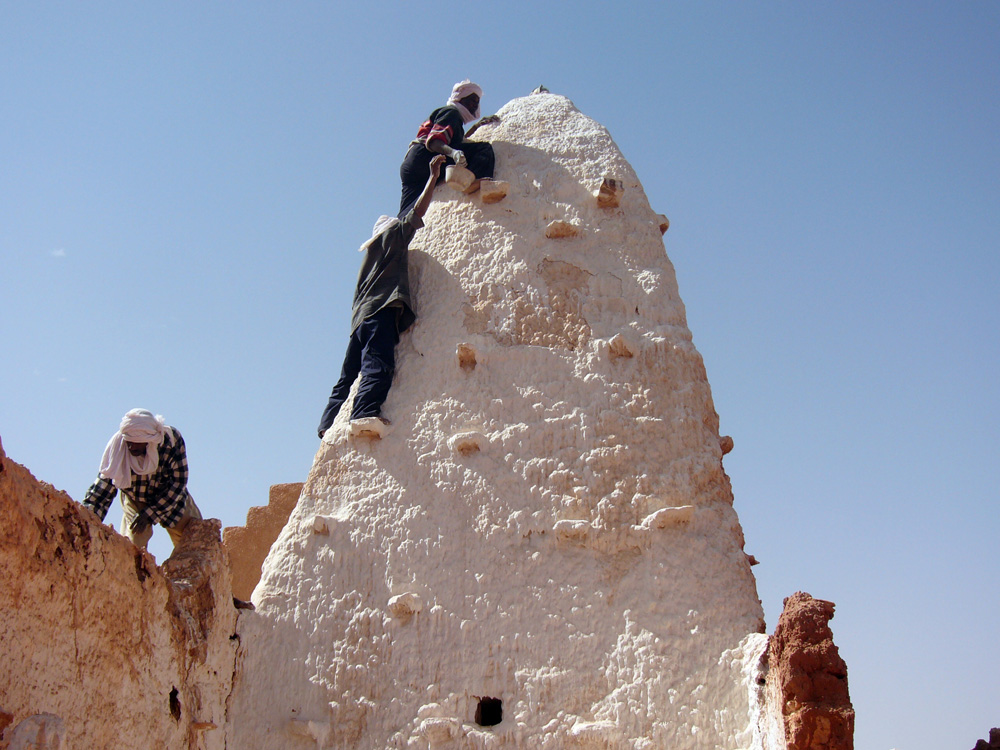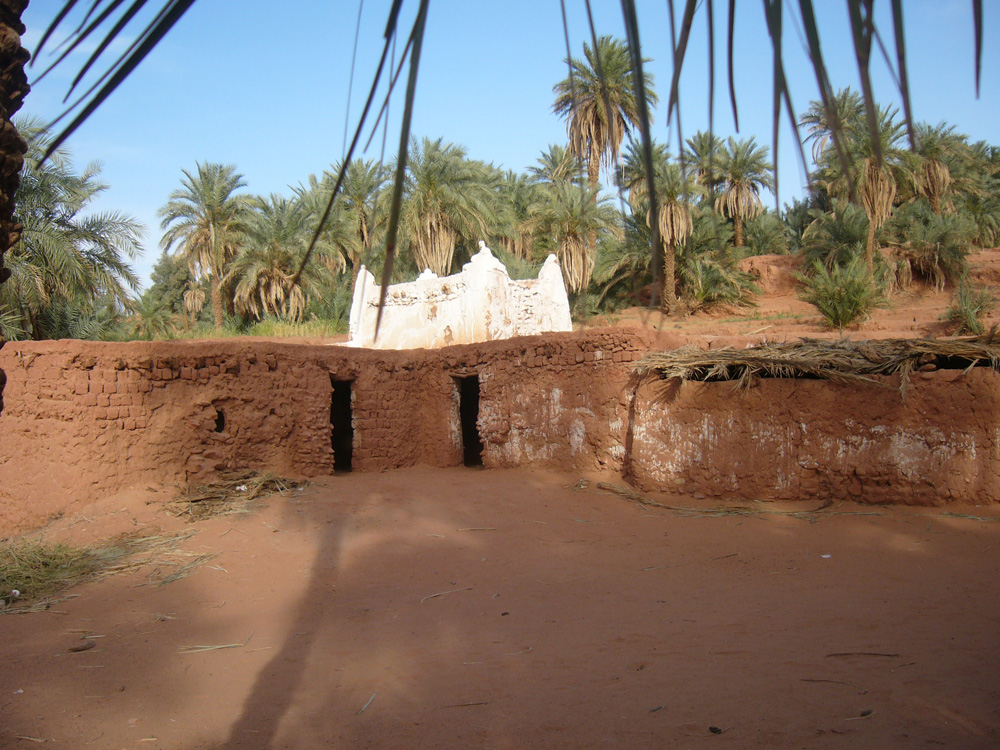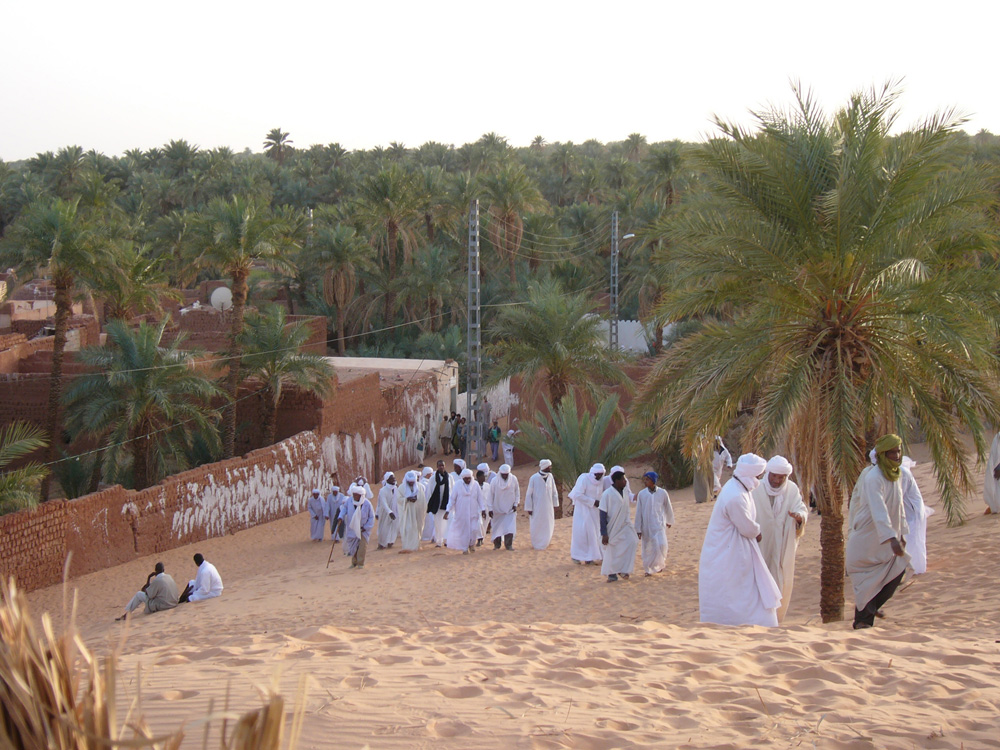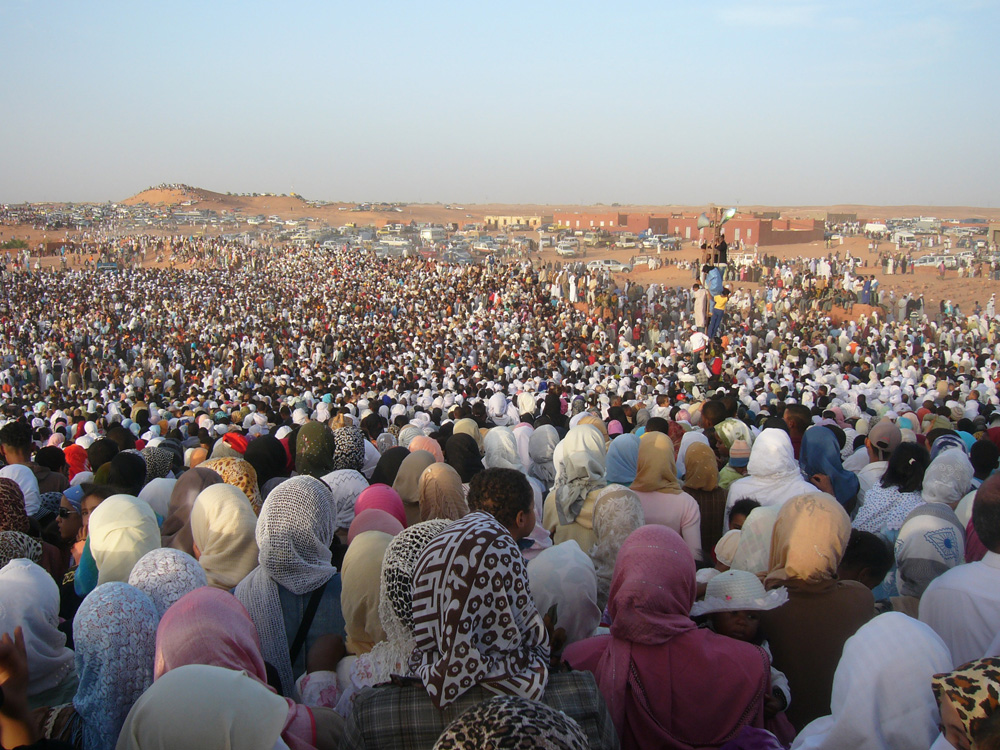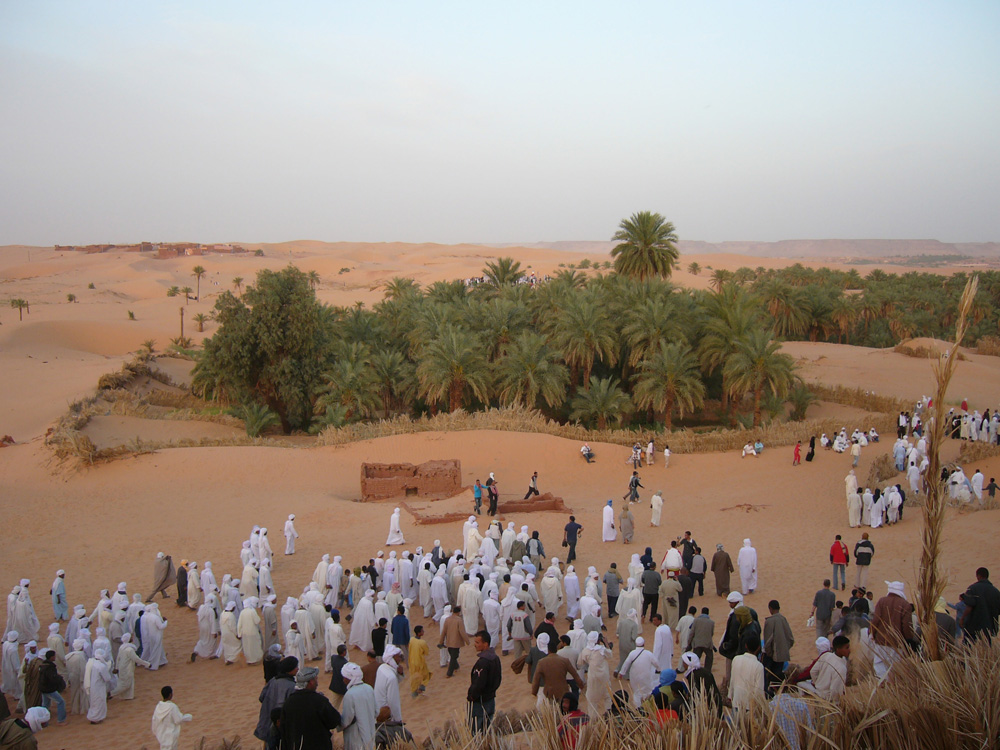
Once a year, during the celebration of the birth of the Prophet Muhammad, groups of pilgrims from several ksour (villages) in the Gourara region (southwest Sahara of Algeria) visit the mausoleums of certain local saints. The most important of these, and the final destination of the pilgrims, is Sidi El-Hadj Belkacem, located at the center of the Gourara.
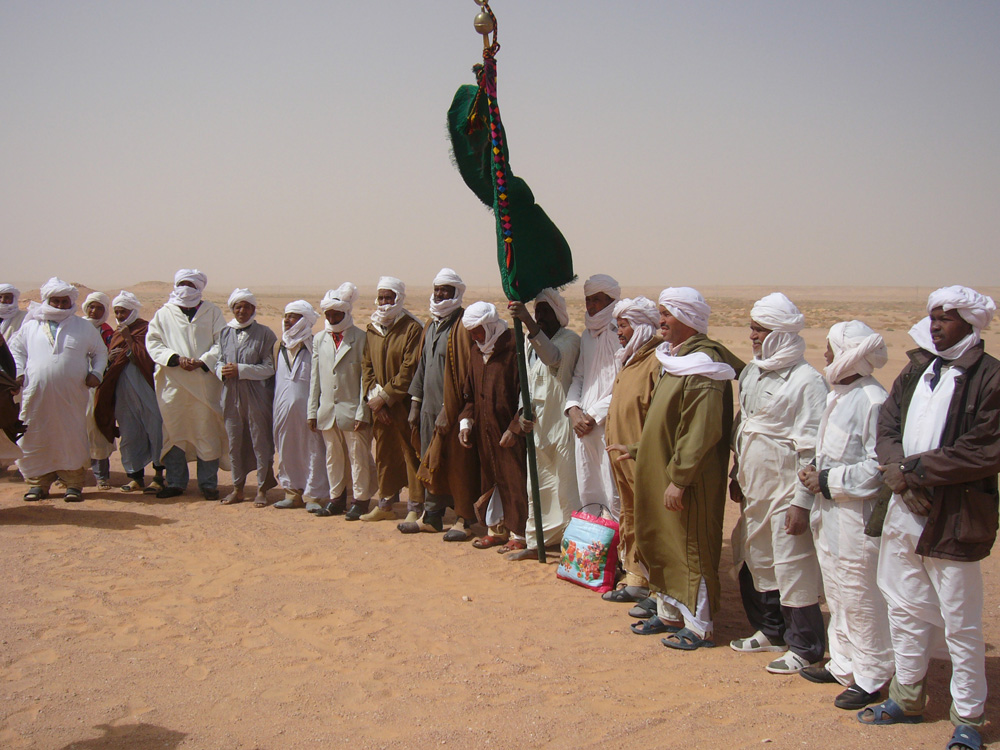
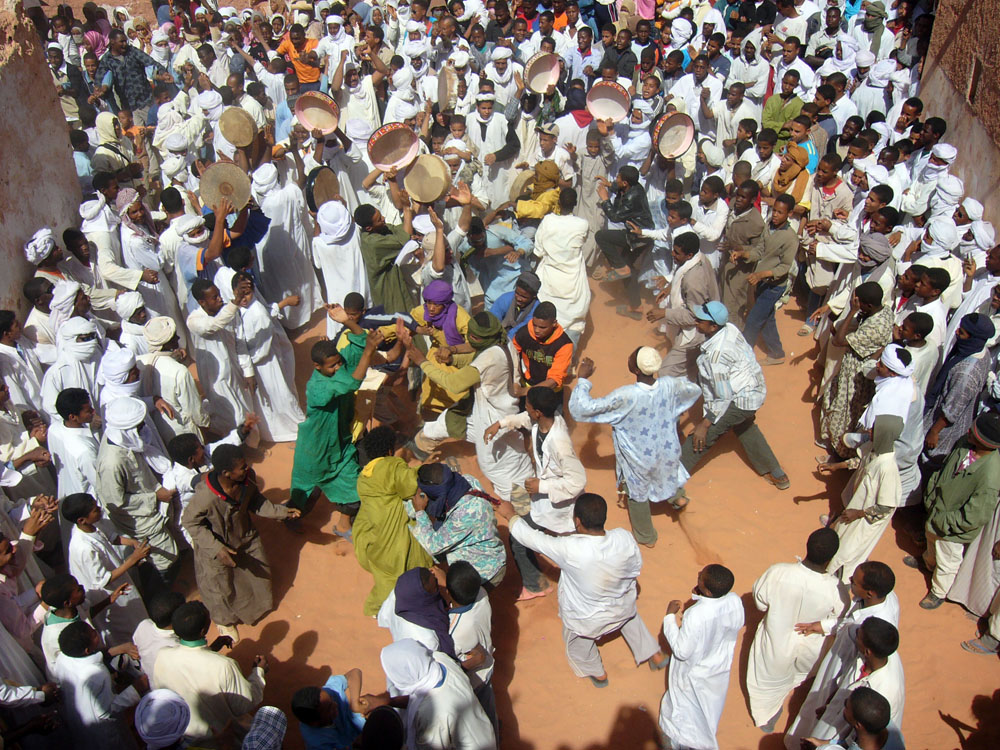
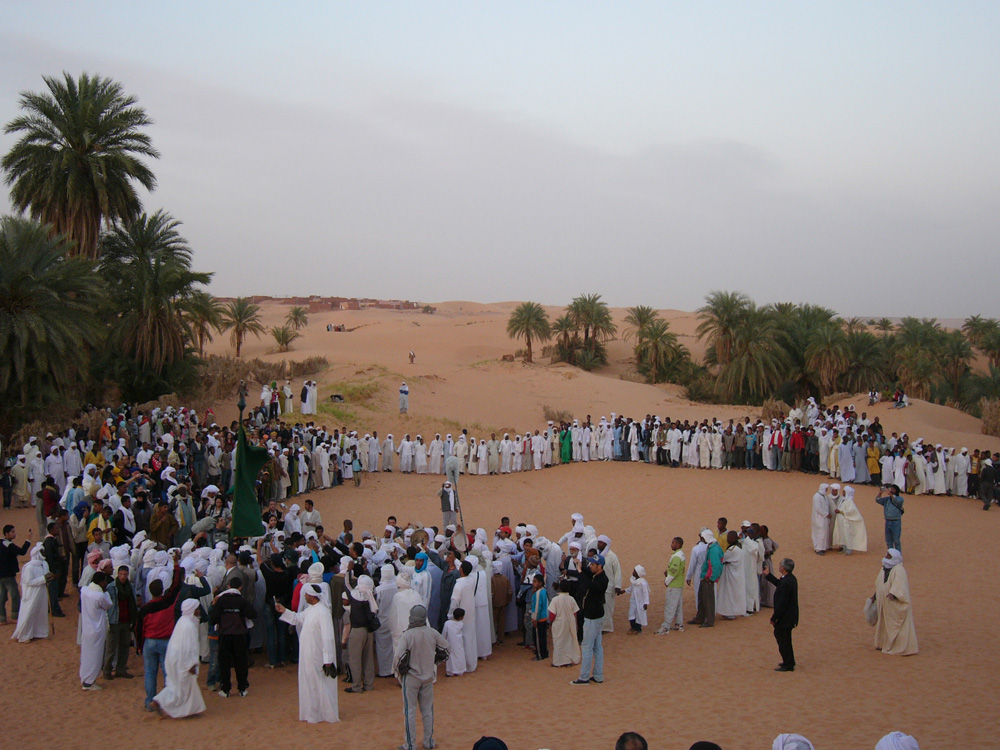
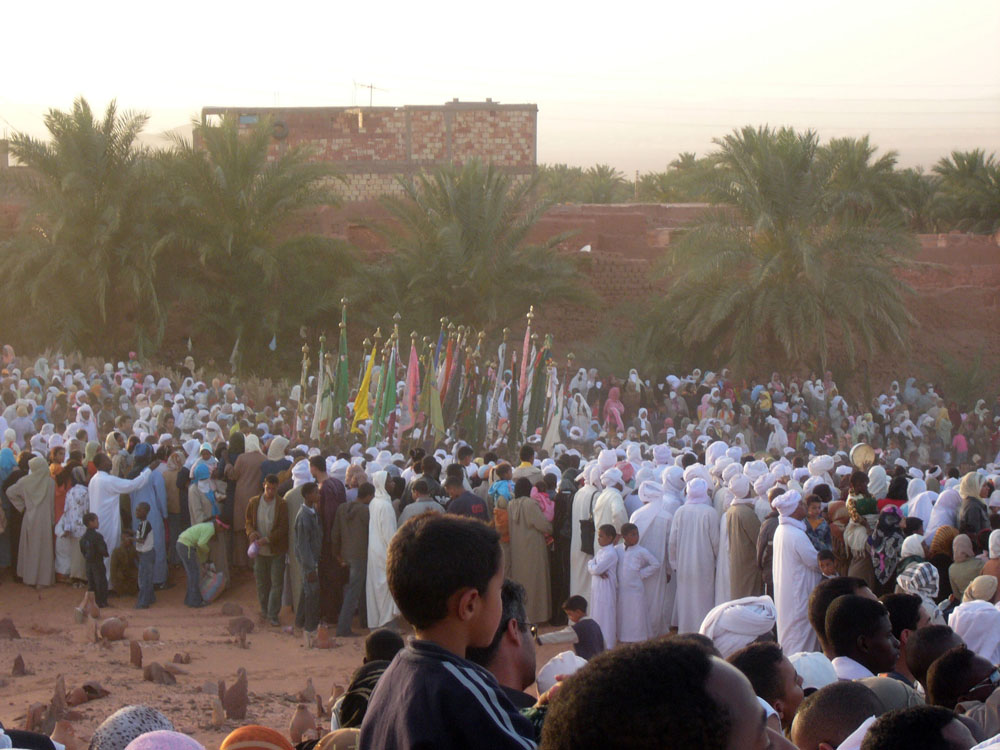
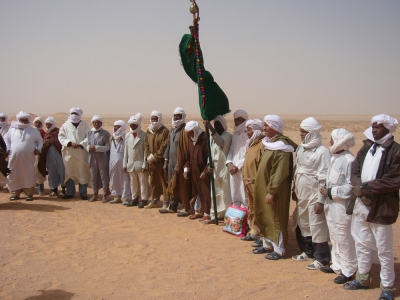
These rituals take place over the course of a week and culminate on the seventh day (hence the name sbuâ, which is also the day when a newborn is given a name). On this day, the different groups of pilgrims gather in a square located outside the ksar where the mausoleum of Sidi El-Hadj Belkacem stands. During the great gathering, the various groups of pilgrims—who act as the performers of the ritual—stand behind the individual carrying the banner of their respective saint.
Spectators watch from an elevated area. The final scene brings together the different groups, who merge for a brief moment into a single entity. This moment of fusion, however, is short-lived, as each group soon reforms to continue the ritual. After the climactic moment of unity, the ritual proceeds more quietly as each group returns to its own ksar—a journey that could last several days.
Through the set of beliefs and practices it encompasses, this ritual is regarded by local populations as a condensed expression of their shared history and of the bonds that unite the different communities.
The ritual is overseen by the oldest and most knowledgeable descendants, who manage the zawiya (institute for religious teaching, guest reception, and financial administration).