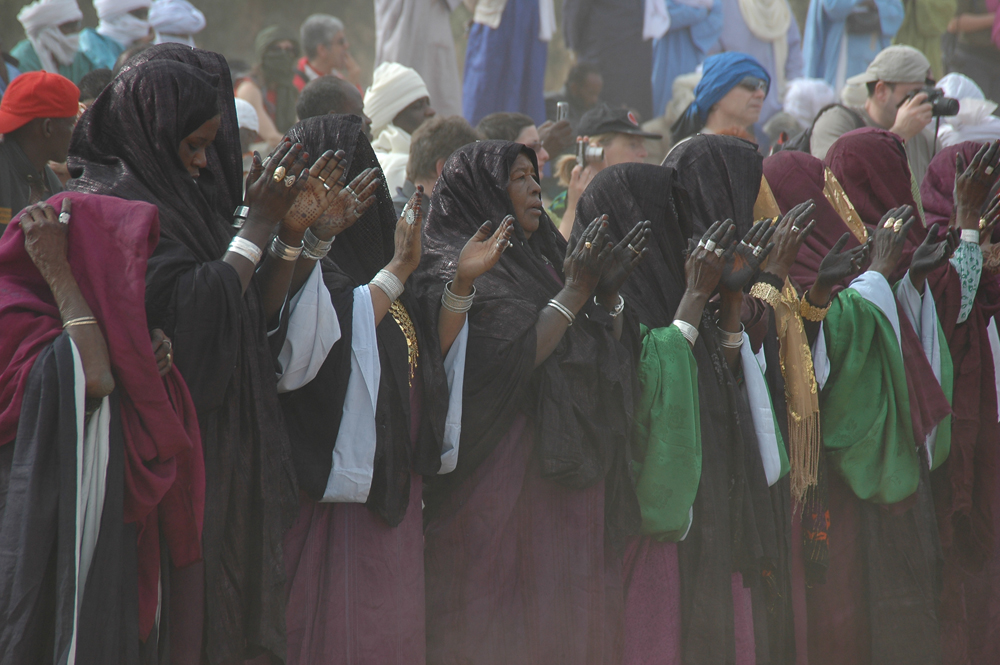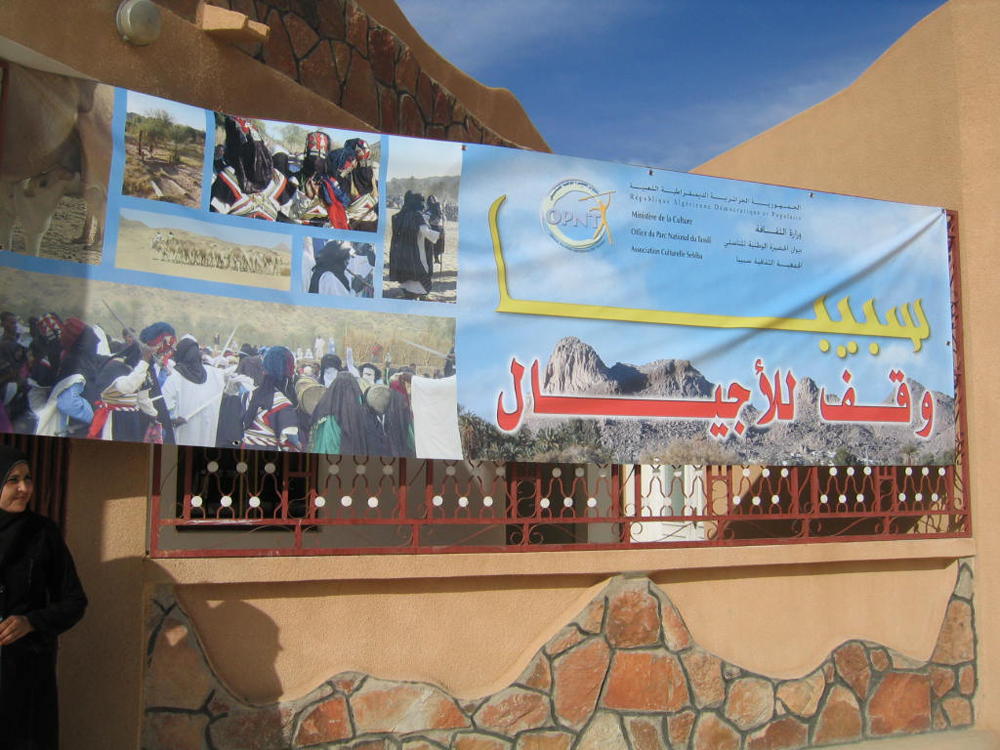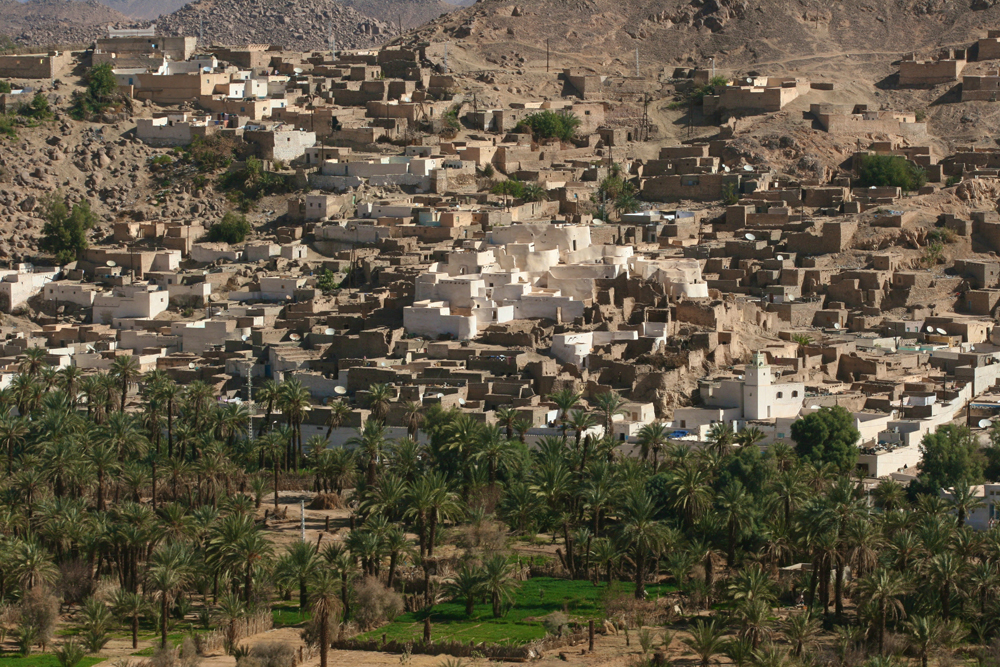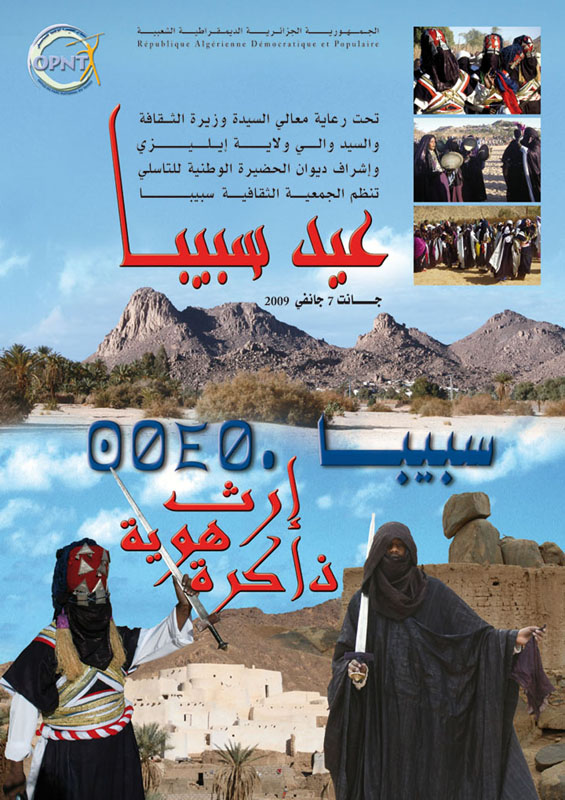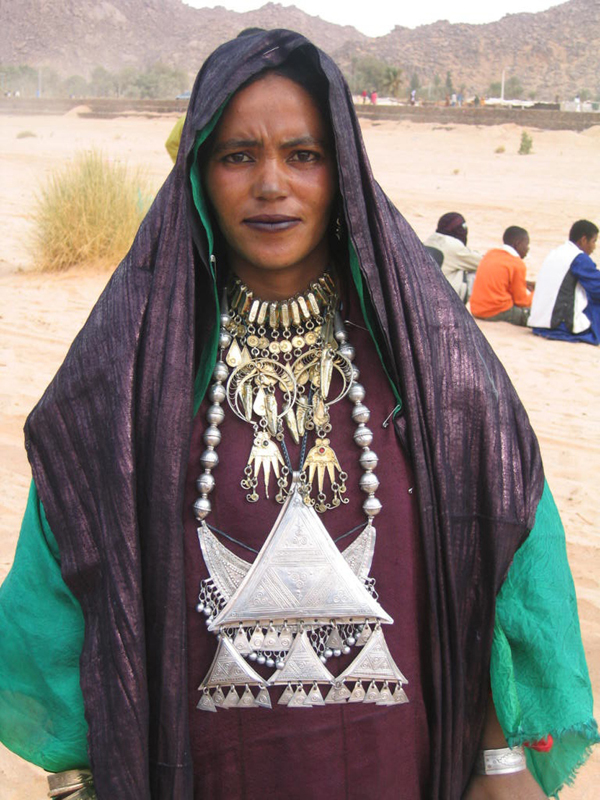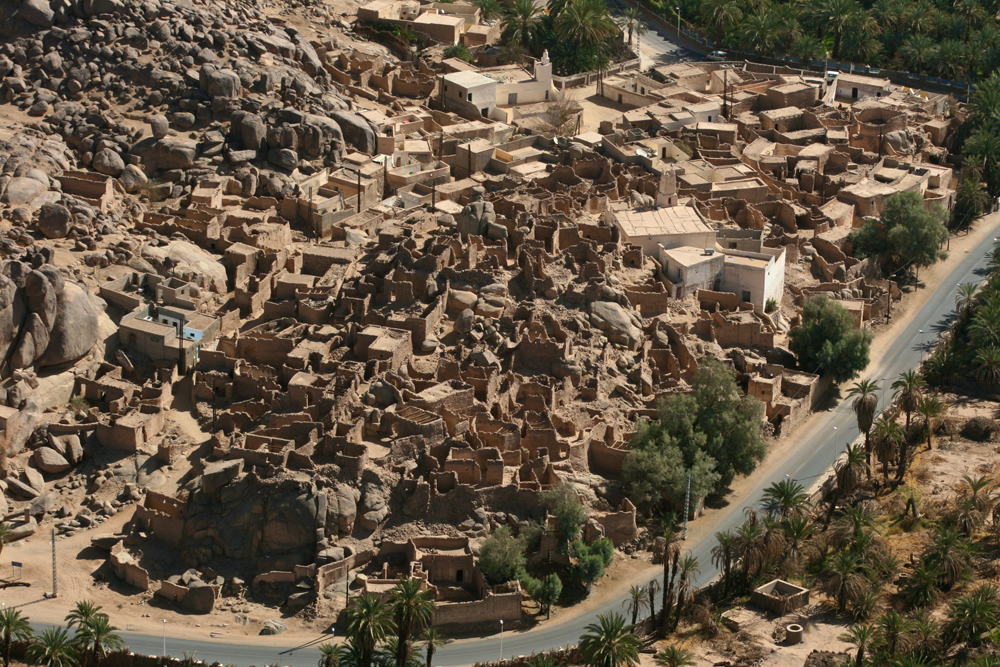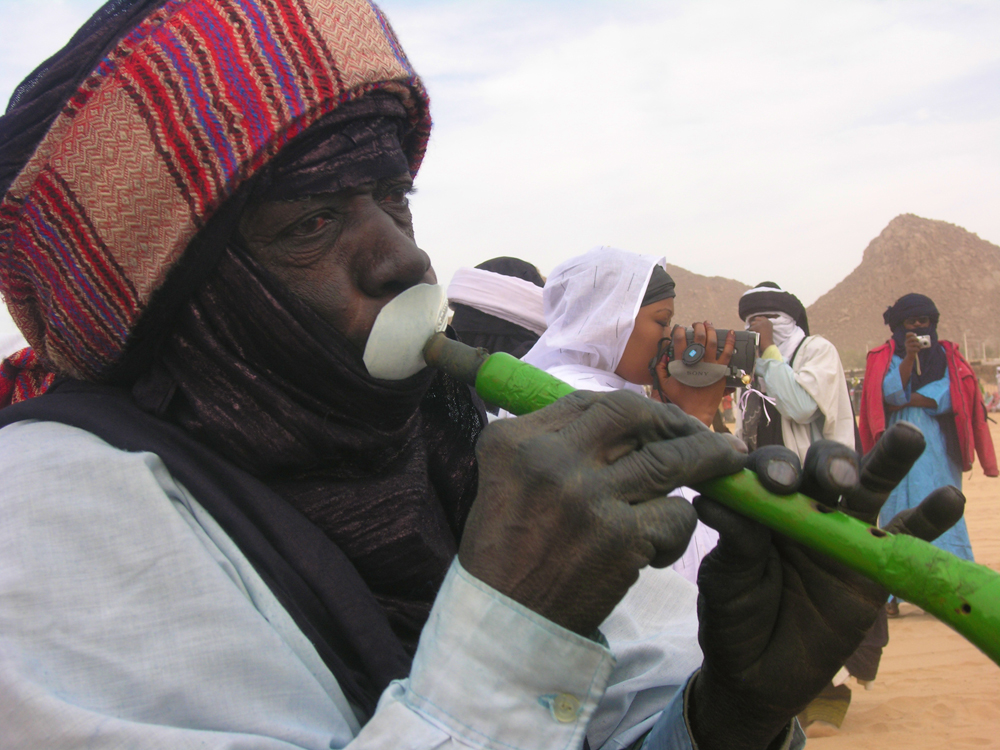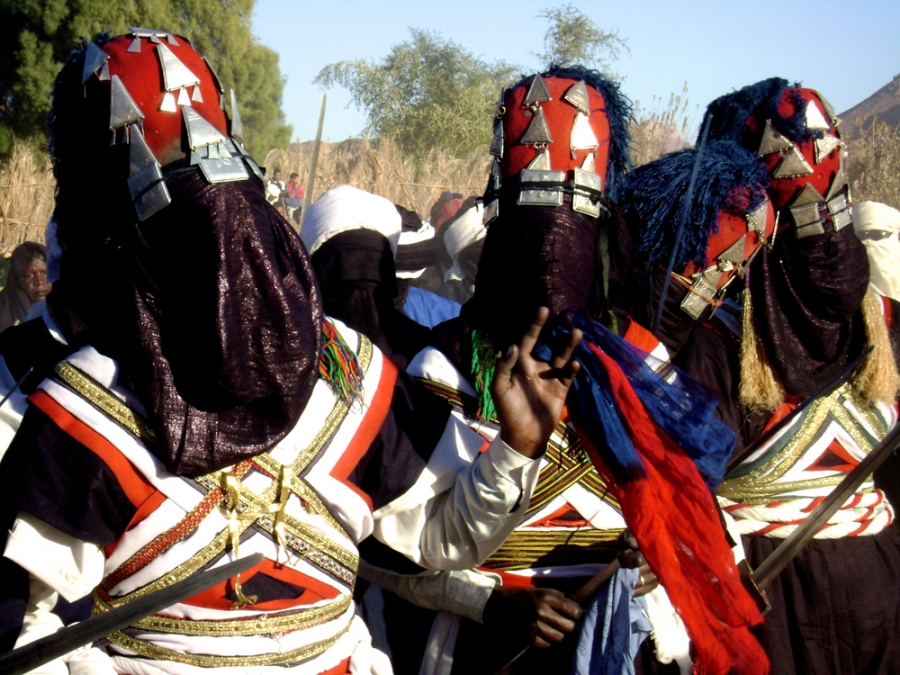
The ritual and the ceremonies of the Sebeïba are held during ten days by two communities living in Djanet during the first month of the islamic lunar calendar (mouharam). Dancers and singers compete in order to qualify for the representation of their community during a competition which lasts nine days called timoulawine.
The ritual and the ceremonies themselves are composed of two phases:
– The preparation phase, called “Timoulawine”, lasts from the second to the ninth day of the month of Muharram (the first month of the Muslim lunar calendar); and
– The Sebeïba ceremony proper, which takes place on the tenth day of the month of Muharram.
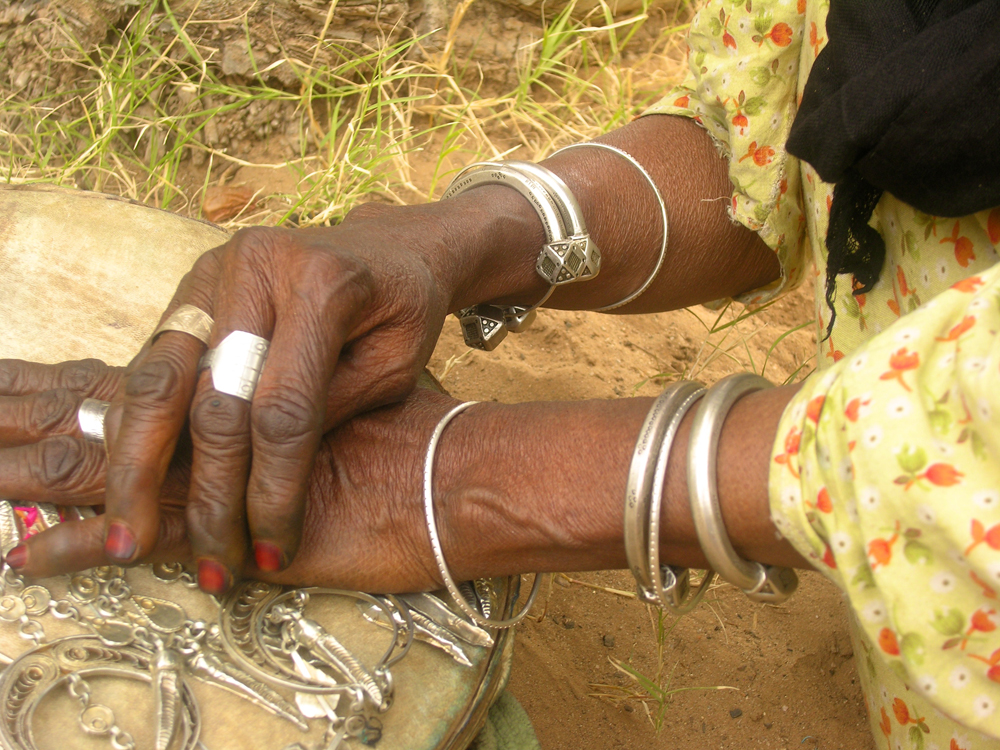
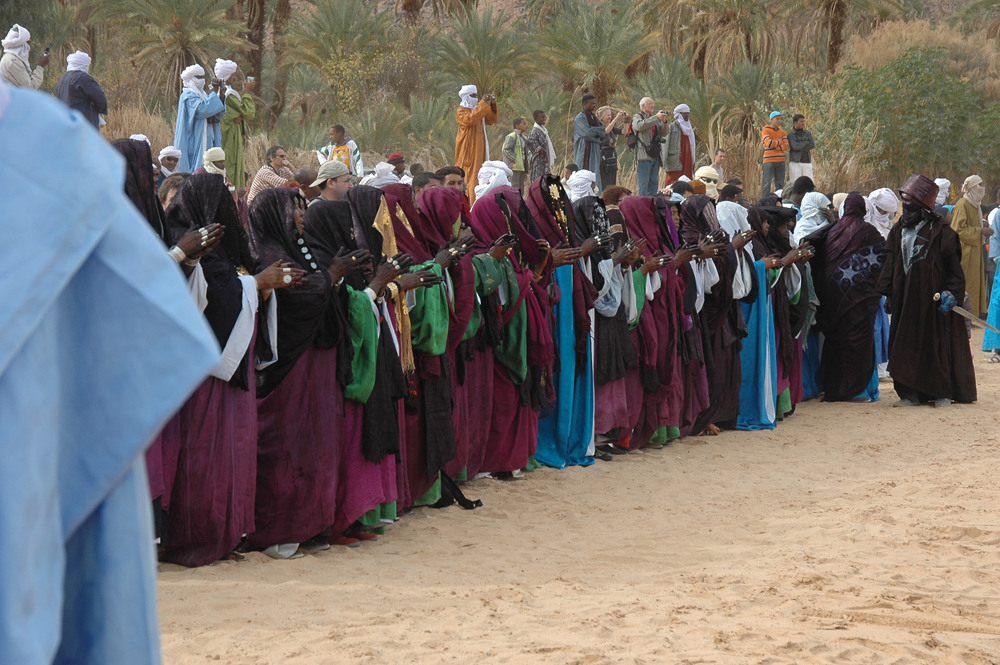
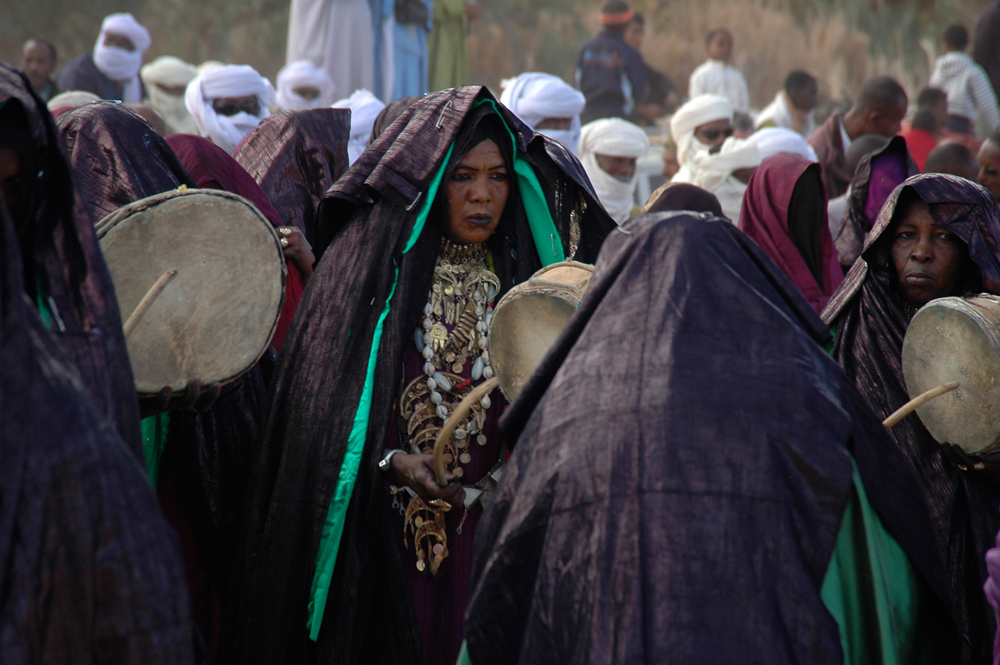
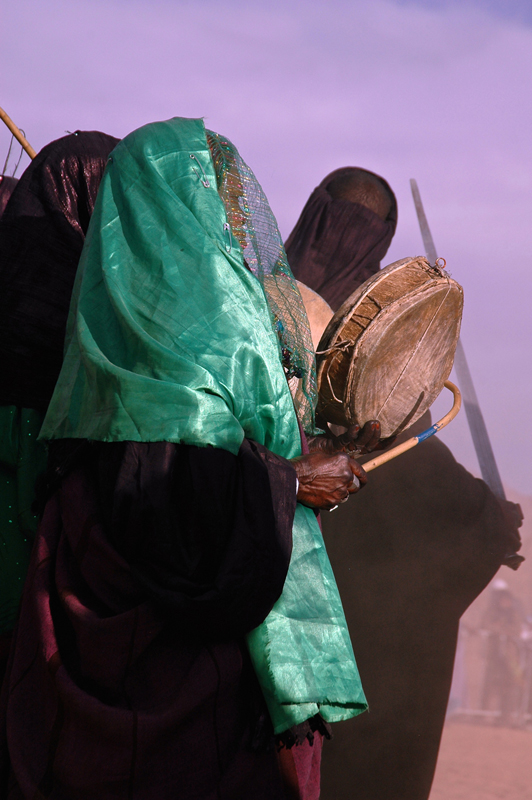
The Timoulaouines consist of training in ganga (drum) playing and singing for women, and dancing for men. These are competitive sessions in which the best dancers, ganga players and singers are selected. The eight evening gatherings take place in dedicated spaces: “Dag Zawiya” for the people of El Mihan, and “Kheila” for those of Azellouaz.
The ritual and ceremonies of the tenth day are carried out in three stages:
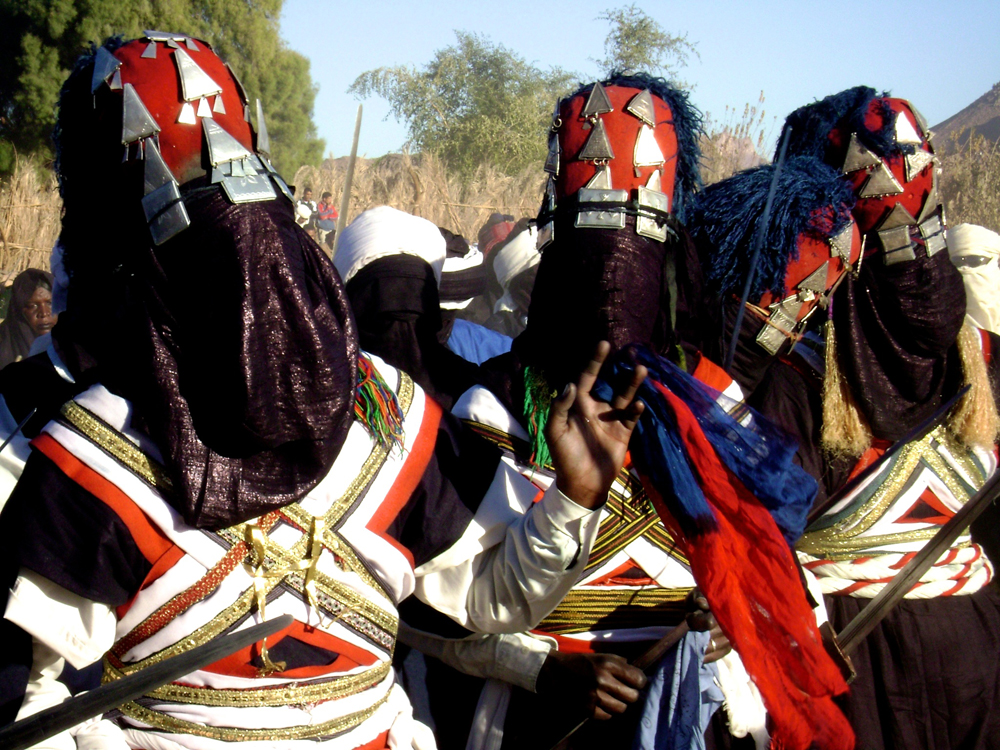
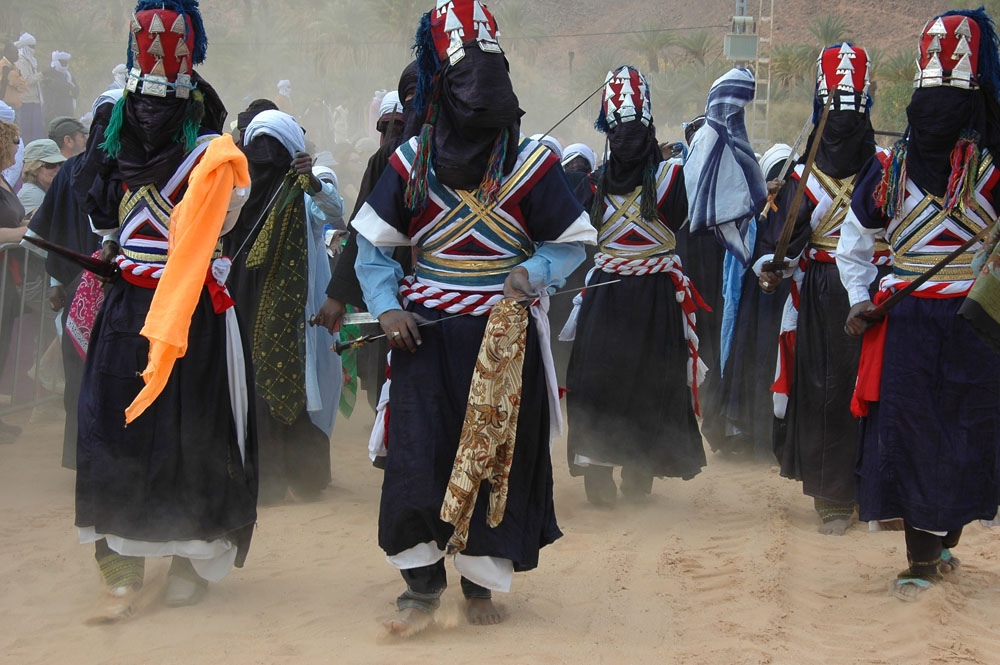
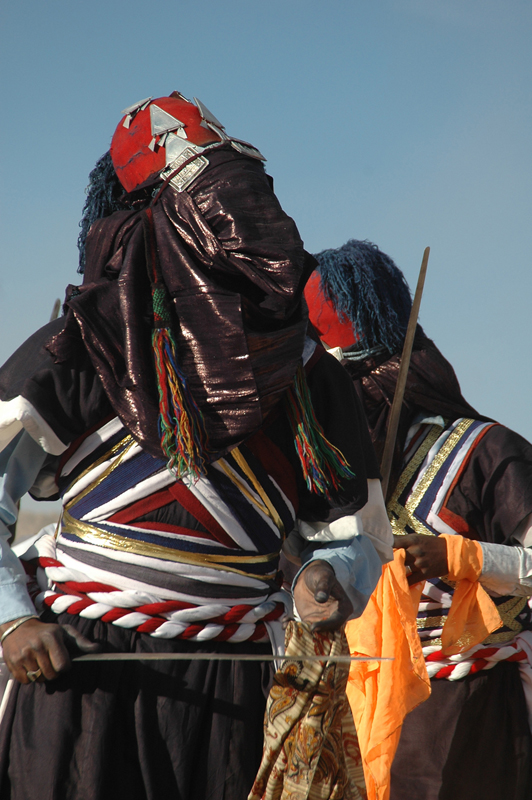
– The first stage is called “Tenfar”. Participants from both villages go to the place known as Loghya (located between the two villages), led by dancers dressed in warrior outfits called Takambout, followed by groups of women playing tambourines and singing.
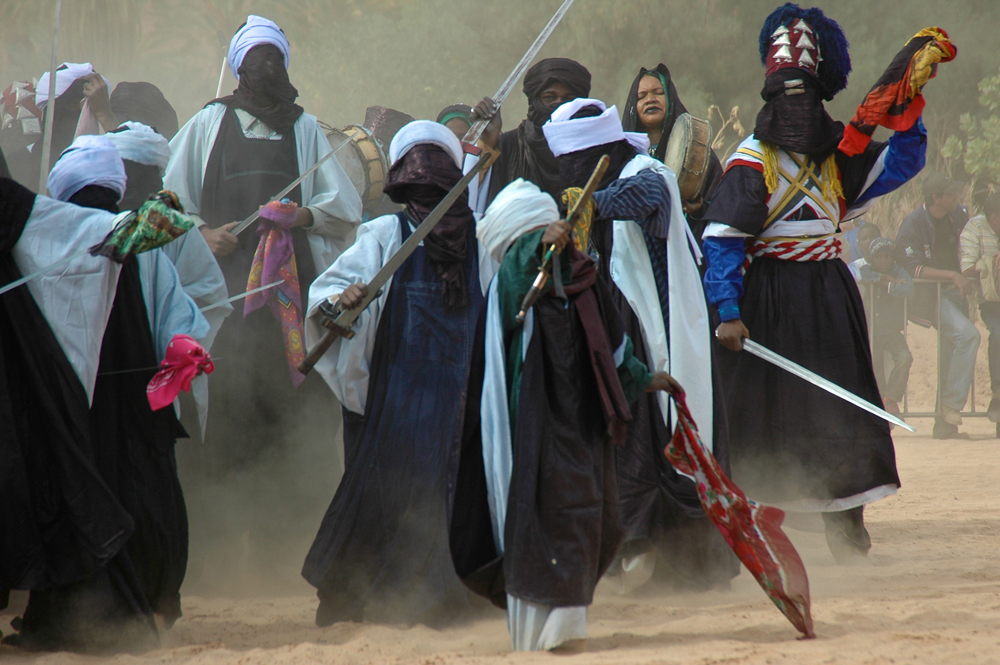
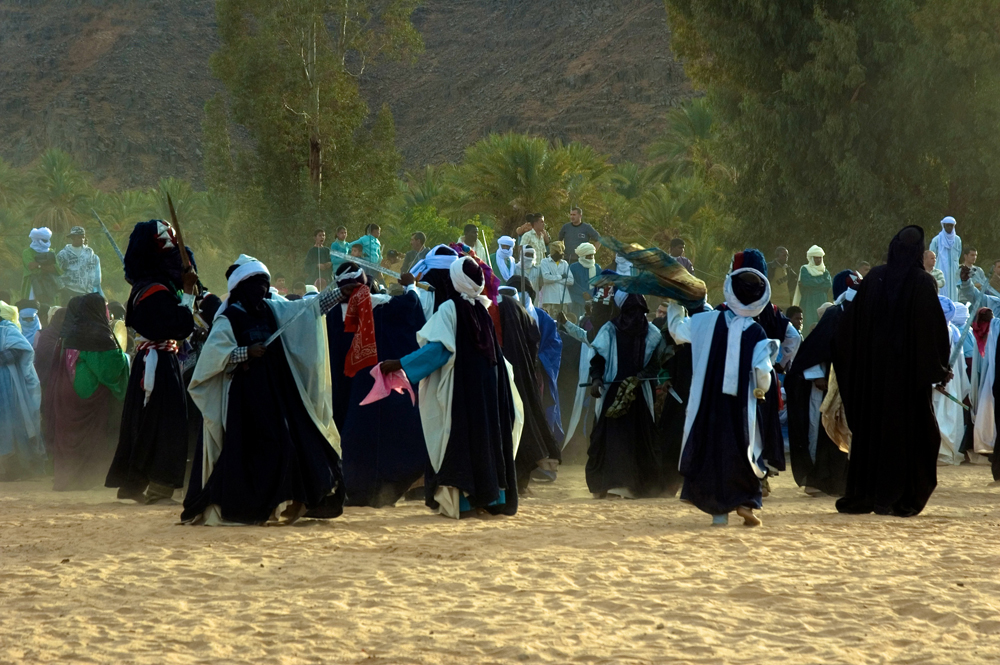
– The second stage is called “Tikemssine”. The male participants parade while displaying their garments and various weapons.
– The third stage is called “Aghalay n awatay” (the renewal of the year). Participants in the ritual and ceremonies circle the space dedicated to this practice, located at the edge of the gardens of both communities, making their swords clatter, always accompanied by the rhythm of the ganga and the women’s chants. At the end of the day, people disperse.
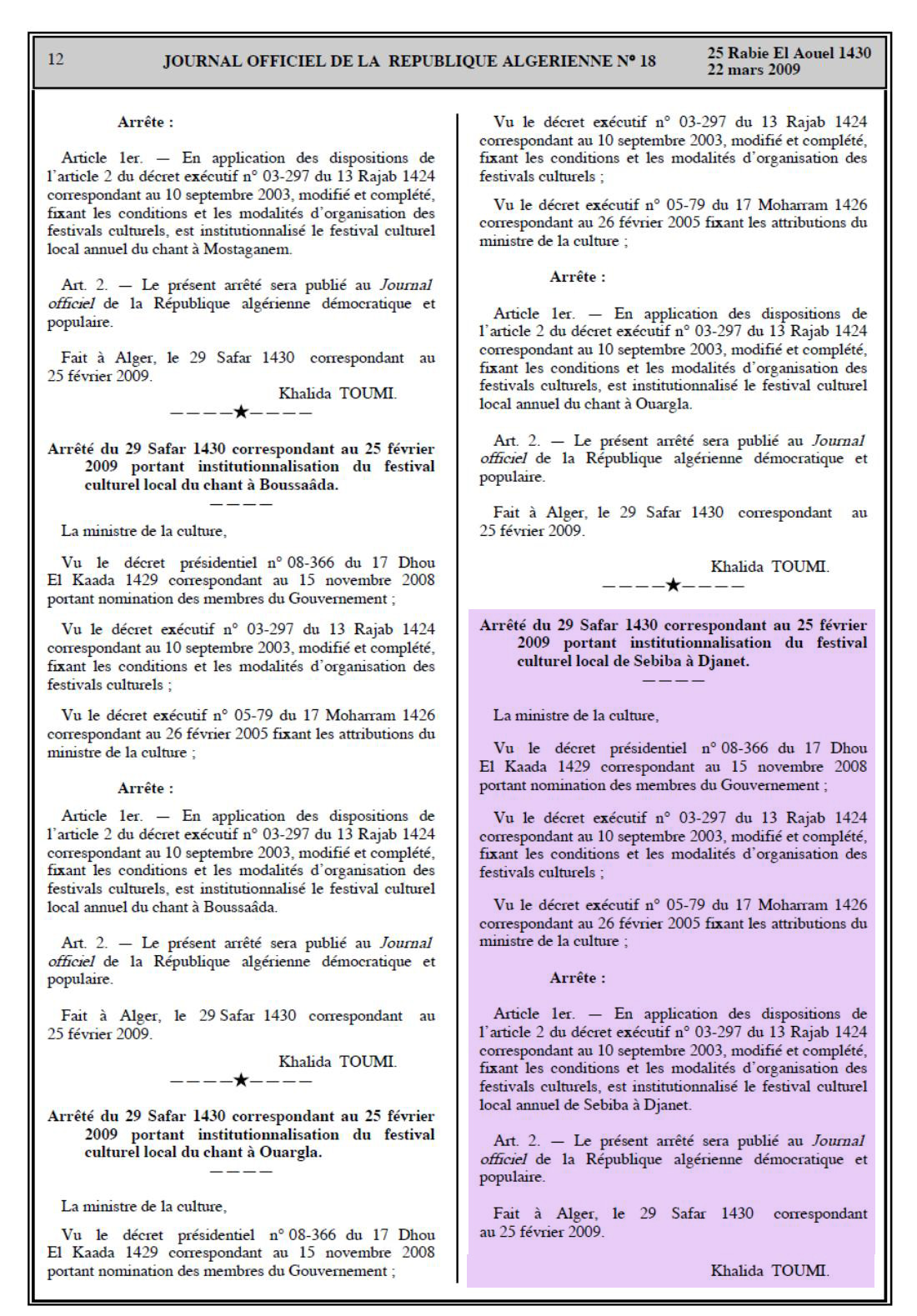
- Ritual and ceremonies of Sebeiba in the oasis of Djanet (PDF)