Rakb Sidi Cheikh is a pilgrimage organized by the nomadic and sedentary communities of the Ouled Sidi Cheikh. These communities descend from a great Sufi (Muslim mystic), Sidi ‘Abd el Qader Ben Mohammed, born in 1532 in the western part of the Saharan Atlas in Algeria. He died near Stiten and was buried in El Abiodh Sidi Cheikh in 1616, where his mausoleum now stands.
The pilgrimage brings together communities affiliated with the Sufi order known as the Cheikhiyya, founded by Sidi Cheikh himself. It takes place at his mausoleum over three days, starting on the last Thursday of June each year, and includes both religious rituals and festive secular events.
-
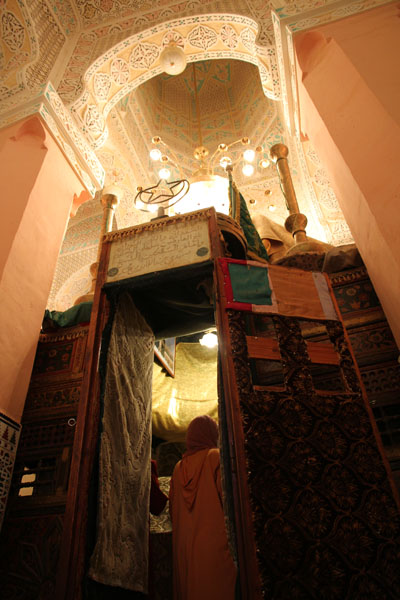
The visit to the mausoleum — All pilgrims visit the mausoleum, where they recite verses from the Qur’an, pray, and meditate. It is a place of deep spirituality.
-
The "Selka" — This ritual is performed by those who have memorized the Qur’an, who recite it together throughout the night from Thursday to Friday. At dawn, a ceremony called "El Khatima" takes place, during which communities renew their affiliation with the Cheikhiyya Sufi path.
-
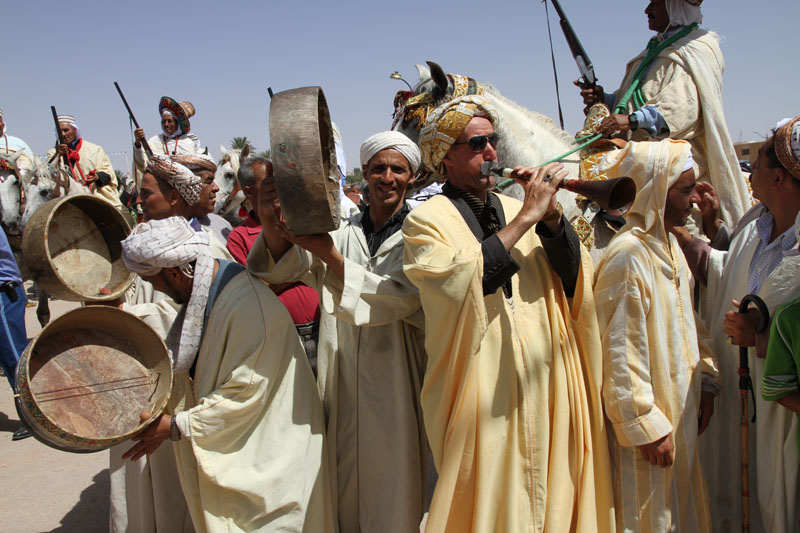
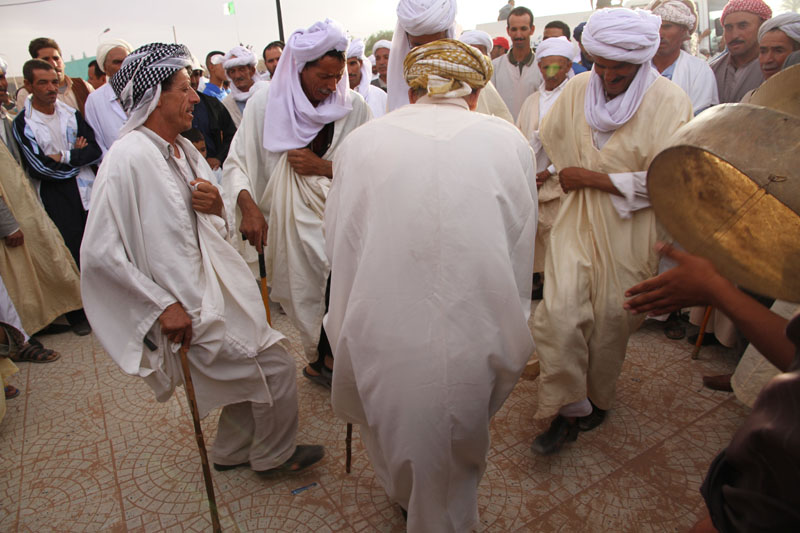
Hymns and dances — Hymns in praise of Sidi Cheikh are performed, along with women’s dances known as "Saf" at the Zaouiya of Lalla Rabi‘a, as well as the "Alaoui" dance, which has a warrior-like rhythm.
-
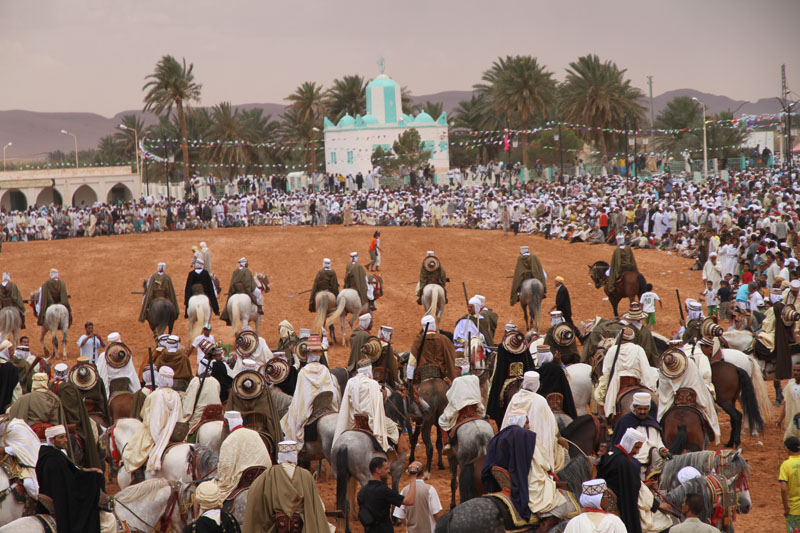
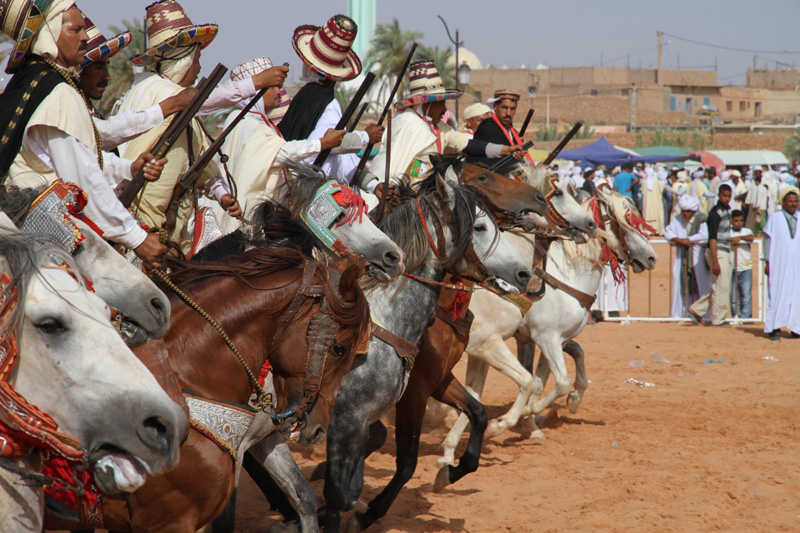
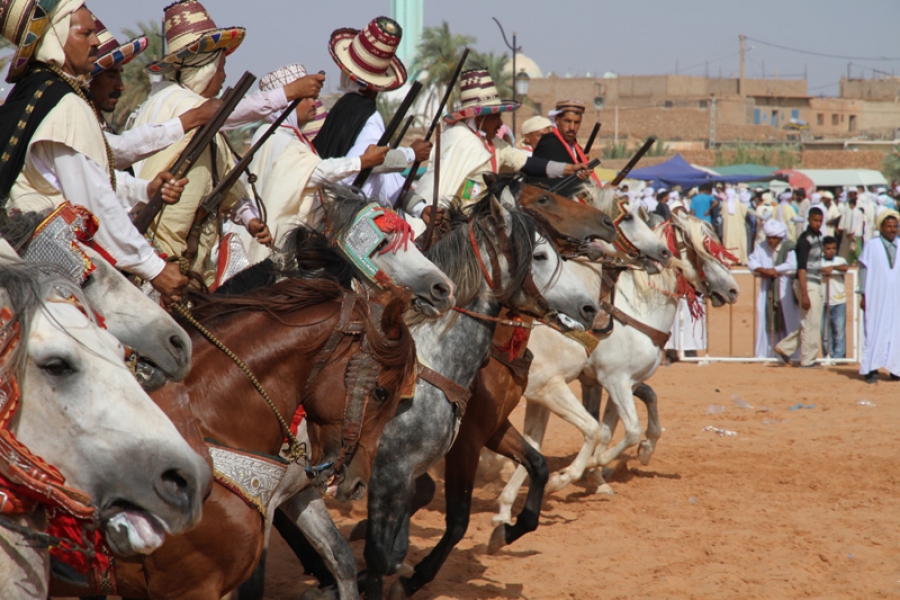
Equestrian games — These events involve over three hundred horsemen from all the communities affiliated with the Sufi order.
-
Stick fighting games — Participants engage in mock combat using sticks, skillfully avoiding causing any real harm.
-
Commensality — Food is shared generously with all pilgrims and visiting guests for three consecutive days.