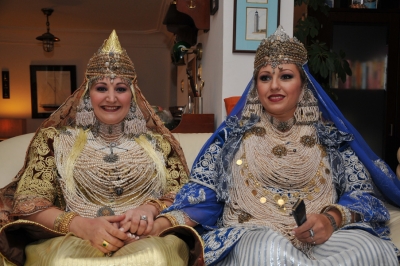
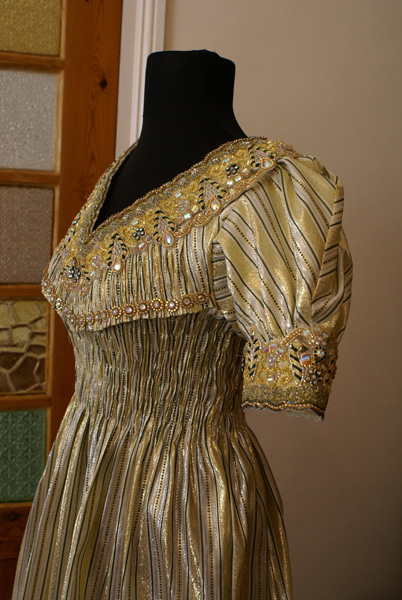
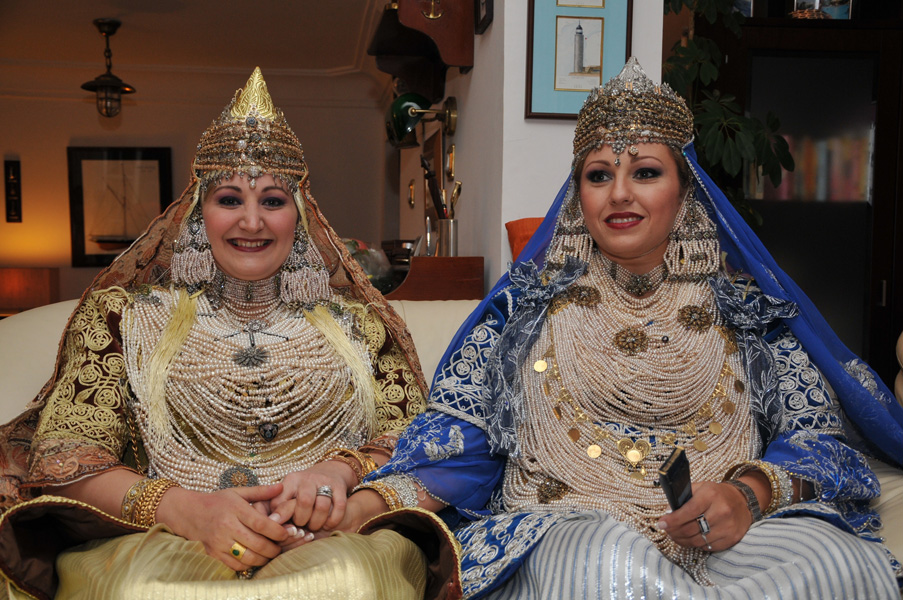
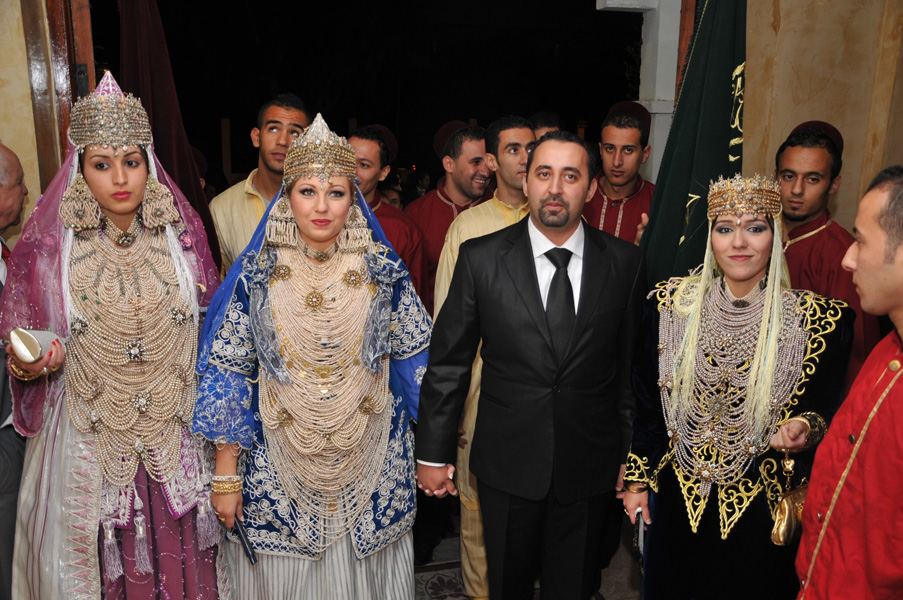
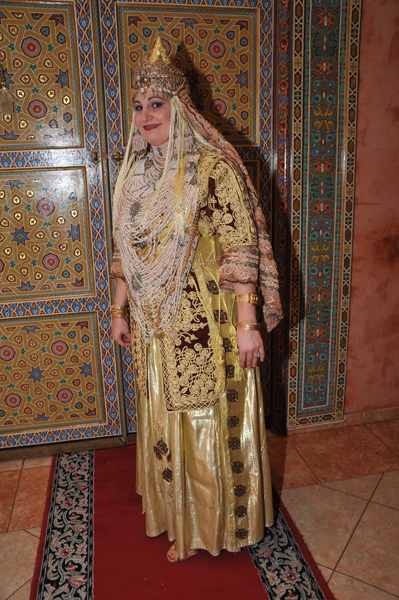
The bridal costume embodies the main festive event of the Tlemcen community. It symbolizes the alliance between families and the continuity between generations. The costume ritual represents the central sequence of the celebration: the bride wears a blousa-style dress made from handwoven golden silk.
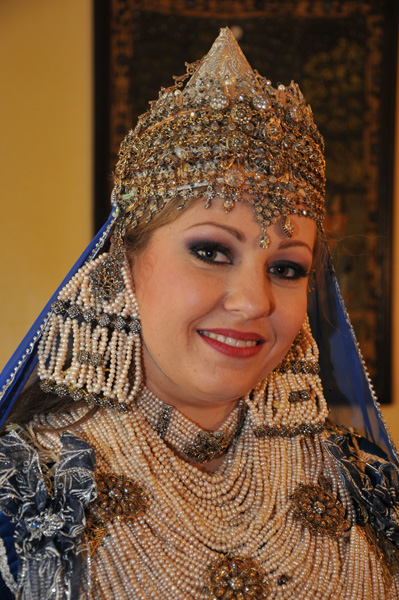
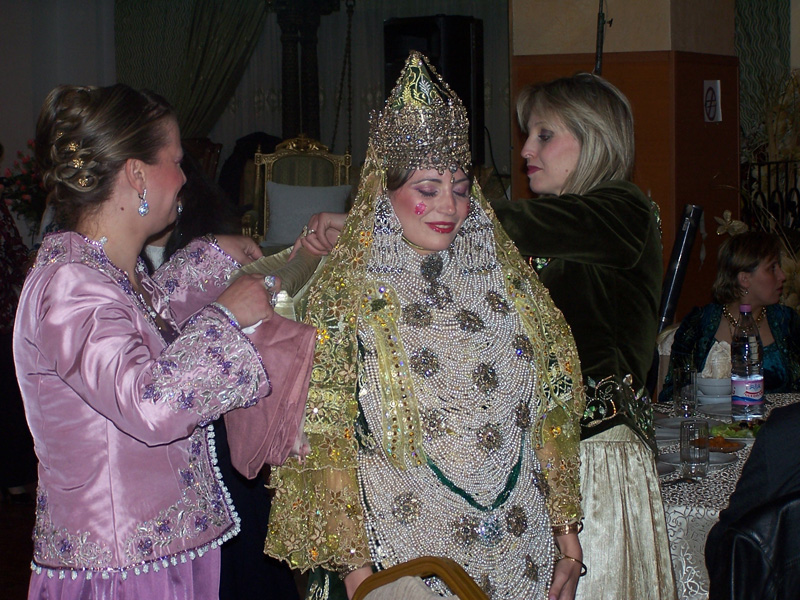
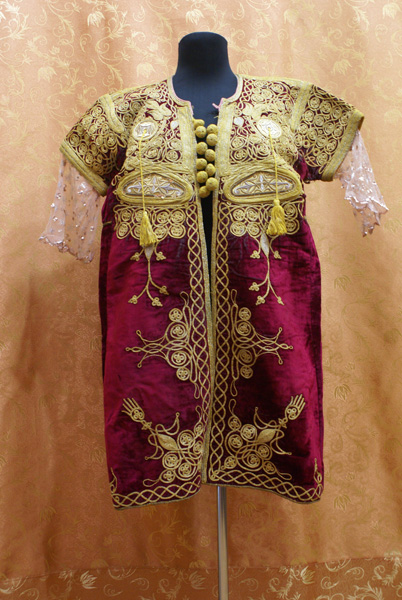
Symbolic henna designs are applied to her hands. She is surrounded by her sisters, cousins, and married friends, all adorned in their own bridal costumes. An aunt helps the bride put on the embroidered velvet caftan, the jewelry, and the conical headdress that complete the outfit.
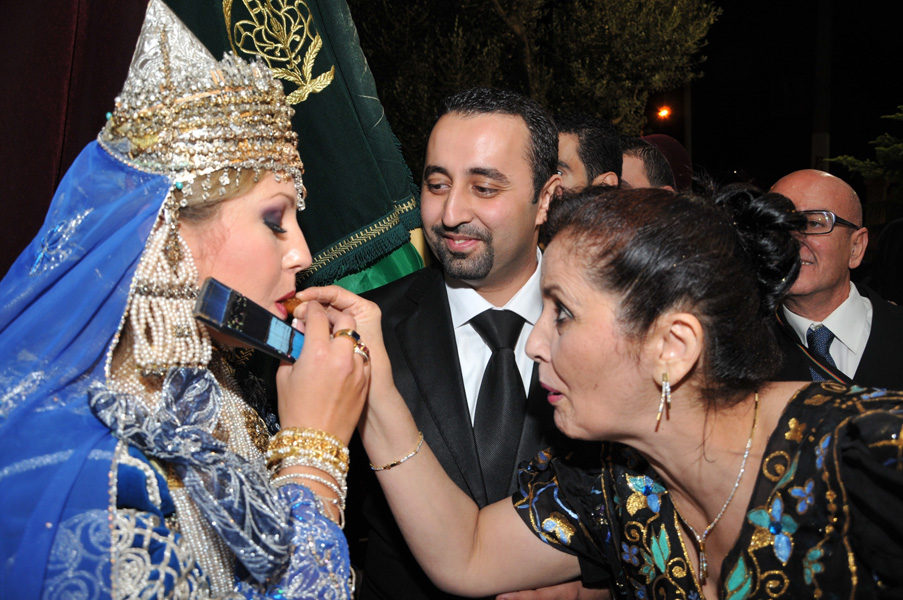
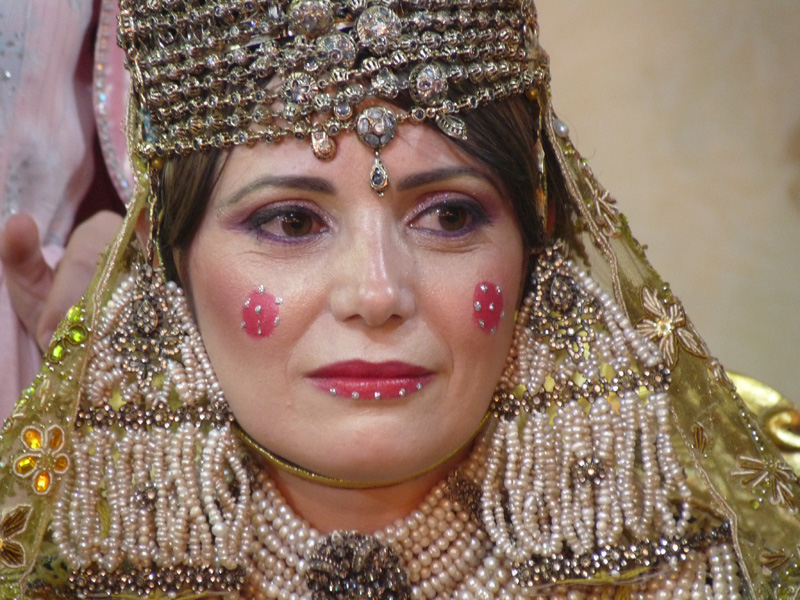
The countless strands of baroque pearls are meant to protect her vital and reproductive organs from evil spirits. She is then covered with a shimmering silk veil—an inheritance from Berbero-Roman nuptial rites—before leaving her parents’ home. At the wedding venue, the aunt paints rounded red and silver designs on her cheeks and beneath her lower lip. These circular patterns are intended to ward off bad luck throughout the rite of passage.
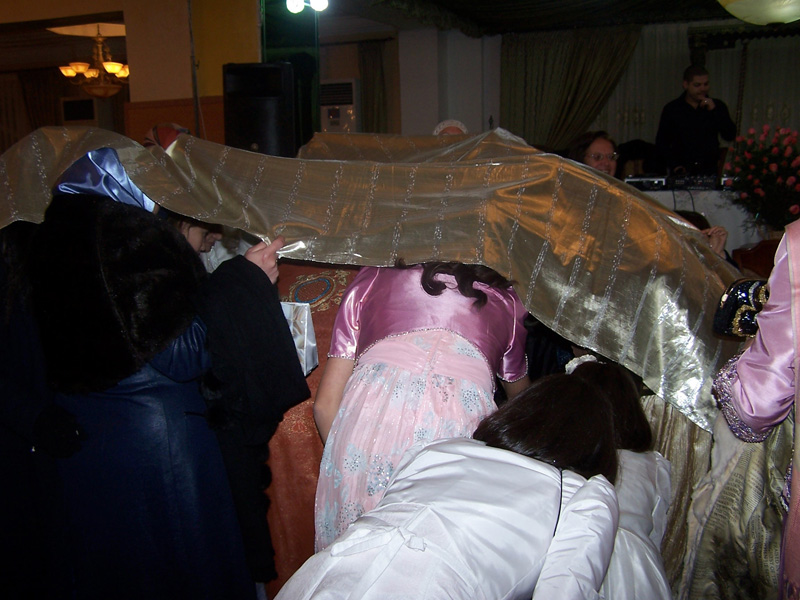
The ritual, known as El-Djeloua, takes place away from the guests’ view, beneath the golden veil that is believed to shield against malevolent spirits. Protected by the caftan, the jewels, and the ritual makeup just applied to her, the bride can finally be unveiled, admired by the guests, and dance.
PHOTOS
Film documentaire de 10 min